August 11, 2015

Paul Krugman is Correct About Trump and the Rest of the GOP Field. The Know-Nothings Have Made a Comeback

Update, Aug. 11th: Those who thought Trump would implode after bullying everyone at the GOP debate and blowing lots of noisy hot air out of his.. orifices, new polls indicate the opposite, because, heck, the conservative base likes what Trump represents. The GOP leadership want to hide this ugly reality from the rest of America.

In the first contest state, Iowa, according to the latest poll, Trump leads the field at 19%, followed by Ben (who?) Carson at 12%.  In the second state contest and first primary, in New Hampshire, Trump jumped up by 7% to 32% [New Hampshire poll] after the debate. The second choice, Jeb Bush, dropped to 11%.

I think it's time for this blog to endorse Donald Trump for the Republican Party's nomination in 2016. I think Sarah Palin would be a great VP on the ticket with him. What? She's not running? OK, let's keep our eyes & ears open on this.....

---------------
Another excellent editorial by Paul K; it's worth reading it in its entirety. (see below)

The GOP strategists and party leaders aren't happy with the Donald because he's damaging and already damaged party with the mainstream (centrists and independents) voters. But, what Trump represents is the basis of the activist part of the Republican party. He's expressing views that, although deeply-held in GOP's heart, are not usually expressed when Republicans are seeking mainstream votes.  Don't believe me? Just read the national and state Republican parties' platforms. There, you find many abhorrent views that fly well with the conservative base but are sunk in the waters of where the rest of the country lives!

I often wonder how it's possible two people to see something in front of their eyes and form totally different conclusions. If it's about factual findings, then, I had believed, it'd be a simple matter of using logic and evidence to ascertain the facts. But, in reality this rarely happens, especially when something is deemed important by the individual!  People are greatly influenced by culture (including religion), ideology, and a personal sense of a comfort zone. The ideological part can numb the mind and make someone lazy to chew up and digest information. Conformity was rewarded. Venturing outside the comfort zone--into the discomfort of realizing you've made a mistake--wasn't/isn't desired either.

But, I think it may be a personality trait on how to approach life. Being a conservative is natural, or at least it's how the vast majority of humans lived and experienced their lives. Captured by culture and in time. Very few ventured outside the norm. It can be argued that such approach made sense too. At the very least, blaze makers were not rewarded but they were rather persecuted, tortured, and killed. Group think was the norm. Of course there were divisions and big conflicts. Recently, I've been pouring over the religious conflicts after the Protestant Reformation. Yes, Martin Luther, Kalvin, and others brought about tremendous change, but much of it--and it took many generations to be evident--was unintended. The bloody religious wars pitted one religious faction against another, but in essence all sides hadn't been that radical--as they all held different versions of the same flawed illusion of a divine creator who insisted upon how we dress, what we eat, how we screw, how we kill our enemies, etc.

Now, how is it that most of us think Trump is someone who uses empty (though appealing) rhetoric. He said he didn't prepare for the first GOP debate last week. I believe him, because he doesn't have to be specific as long as he appears to know and uses generalities specifically addressing the concerns of the conservative base. Instead of responding to Megyn Kelly's question about his paleolithic views on women, he responds by personally attacking her and ..Rosie O'Donnell. That debate broke all viewership records for such debates other than presidential ones. Trump was tramp. The GOP leadership may not want him but if the activist base--those who show up during the Republican primary selection process--this is exciting.

The 2016 election, was supposed to be a showcase of the "new" Republican party. There's no incumbent running this time, so both parties have a chance to re-define themselves by showcasing their candidates. They're indeed doing so....

 Paul Krugman's editorial [link] in its entirety


This was, according to many commentators, going to be the election cycle Republicans got to show off their “deep bench.” The race for the nomination would include experienced governors like Jeb Bush and Scott Walker, fresh thinkers like Rand Paul, and attractive new players like Marco Rubio. Instead, however, Donald Trump leads the field by a wide margin. What happened?

The answer, according to many of those who didn’t see it coming, is gullibility: People can’t tell the difference between someone who sounds as if he knows what he’s talking about and someone who is actually serious about the issues. And for sure there’s a lot of gullibility out there. But if you ask me, the pundits have been at least as gullible as the public, and still are.


For example, Mr. Trump’s economic views, a sort of mishmash of standard conservative talking points and protectionism, are definitely confused. But is that any worse than Jeb Bush’s deep voodoo, his claim that he could double the underlying growth rate of the American economy? And Mr. Bush’s credibility isn’t helped by his evidence for that claim: the relatively rapid growth Florida experienced during the immense housing bubble that coincided with his time as governor.

Mr. Trump, famously, is a “birther” — someone who has questioned whether President Obama was born in the United States. But is that any worse than Scott Walker’s declaration that he isn’t sure whether the president is a Christian?


Mr. Trump’s declared intention to deport all illegal immigrants is definitely extreme, and would require deep violations of civil liberties. But are there any defenders of civil liberties in the modern G.O.P.? Notice how eagerly Rand Paul, self-described libertarian, has joined in the witch hunt against Planned Parenthood.
And while Mr. Trump is definitely appealing to know-nothingism, Marco Rubio, climate change denier, has made “I’m not a scientist” his signature line. (Memo to Mr. Rubio: Presidents don’t have to be experts on everything, but they do need to listen to experts, and decide which ones to believe.)


The point is that while media puff pieces have portrayed Mr. Trump’s rivals as serious men — Jeb the moderate, Rand the original thinker, Marco the face of a new generation — their supposed seriousness is all surface. Judge them by positions as opposed to image, and what you have is a lineup of cranks. And as I said, this is no accident.


It has long been obvious that the conventions of political reporting and political commentary make it almost impossible to say the obvious — namely, that one of our two major parties has gone off the deep end. Or as the political analysts Thomas Mann and Norman Ornstein put it in their book “It’s Even Worse Than It Looks,” the G.O.P. has become an “insurgent outlier … un-persuaded by conventional understanding of facts, evidence, and science.” It’s a party that has no room for rational positions on many major issues.


Or to put it another way, modern Republican politicians can’t be serious — not if they want to win primaries and have any future within the party. Crank economics, crank science, crank foreign policy are all necessary parts of a candidate’s resume.


Until now, however, leading Republicans have generally tried to preserve a façade of respectability, helping the news media to maintain the pretense that it was dealing with a normal political party. What distinguishes Mr. Trump is not so much his positions as it is his lack of interest in maintaining appearances. And it turns out that the party’s base, which demands extremist positions, also prefers those positions delivered straight. Why is anyone surprised?

Remember how Mr. Trump was supposed to implode after his attack on John McCain? Mr. McCain epitomizes the strategy of sounding moderate while taking extreme positions, and is much loved by the press corps, which puts him on TV all the time. But Republican voters, it turns out, couldn’t care less about him.

Can Mr. Trump actually win the nomination? I have no idea. But even if he is eventually pushed aside, pay no attention to all the analyses you will read declaring a return to normal politics. That’s not going to happen; normal politics left the G.O.P. a long time ago. At most, we’ll see a return to normal hypocrisy, the kind that cloaks radical policies and contempt for evidence in conventional-sounding rhetoric. And that won’t be an improvement.

June 27, 2015

A Landmark Supreme Court Decision on Same-sex Marriage Moves the Country in a Progressive Direction. Conservatives Fear Sodom & Gomorrah..

What a month it has been for progressive causes in the US; the latest is that people have a right to marry a person of their choice--a right that should have been recognized long time ago. It's definitely a victory for human rights as our country is inching to the 21st century while the conservatives are kicking and screaming.

A divided supreme court (5-4) finally took the reasonable path to expanding on a couple previous decisions and making same-sex marriage legal in the whole country. In the 1960s, the Loving v. Virginia case the high court established the right to interracial marriage. Virginia's Racial Integrity Act of 1924 had tried to preserve racial purity, as many states, primarily in the deep south, forbade interracial marriages.


There have been instances of horrible treatment of homosexuals in the US, but slowly a movement began to form and push on many fronts within America society. Look, LGBT people have been in every society throughout our human history; often they were oppressed into silence and denial of who they were. Societies have benefited, because such individuals contributed to arts, sciences, culture, politics, and every other domain you can think of. It was criminal to punish them for their nature and deny them their constitutional rights.

Almost to the day, 40 years ago, a police raid on a gay bar--the Stonewall Inn in the Village section of New York City--touched off days of violent clashes and riots, events that galvanized the gay community and it became clear to all progressives that this kind of treatment of the LGBT community had to change. In the 1960s and early 1970s, it was a time of rapid change when important questions about the nature of American society were seen as a big challenge. Too much too soon--beginning with women arriving in the marketplace, civil rights for blacks, sexual revolution, political instability--usually triggers a counter-reaction. And, it did. It was the conservatives who pushed back and eventually dominated the highest levels of our political system for at least 25 years, from 1980 to the dawn of the 21st century.


A Long Arduous Road

But, even if progress can be slow, painful, and challenging, it usually marches on.

In 2003, the court struck down anti-sodomy laws in Texas v. Lawrence. Justice Kennedy--a Republican-nominated judge, but with a centrist (swing vote) flair--wrong both that majority opinions, then and last Friday.  In 2012, the same court struck down the DOMA, which had passed by Congress and signed into law by president Clinton in 1996, not so long ago as far as important laws go.

So, what happened? Well, one thing is that once Hawaii and Massachusetts passed laws allowing same-sex marriage, then it became apparent--in the eyes of the conservatives, which include Democrats and traditionalists--that giving rights to those who are entitled to but denied because of religious superstition, nothing bad happens! These two states and a couple dozen more than followed created more happiness and, surprise surprise, God didn't destroy them like Sodom and Gomorrah. Who knew, right?...

But, let's not forget what happened in 2008 and 2012, that is, the election of a Democratic president. We would not have had two liberal judges, Kagan and Sotomayor on the court today if it hadn't been for president Obama! You see presidents nominate judges to the supreme court and these judges aren't all the same in that they have a particular judicial philosophy. The conservatives--Scalia, Alito, Thomas, Roberts--voted against giving people the right to marry a spouse of their choice. The liberals--Kagan, Sotomayor, Breyer--and the centrist Kennedy decided that it is a constitutional right in the US for adults to marry any person of their choice, and that every state not only has to recognize marriages from other states but every state must allow same-sex marriage!

A present for the conservatives
The conservatives, including the likes of Scalia, Thomas, Alito, and Roberts in their dissent proposed laughable arguments. It's incredible that Scalia and Roberts are considered intellectuals. If you look at their arguments they sound sophisticated bullshit, ignorant of historical framework, and the constitutional liberal democracy we're supposed to have here. 

For example, they say unelected judges shouldn't be undone the work of legislatures, referring to the state legislatures that had passed constitutional amendments prohibiting same-sex marriage. But, a liberal democracy that has enshrined rights in the federal constitution is not a pure democracy, whereas the majority can take rights from the minority. That was the old south, keeping slaves because, guess what, the majority thought it was fine and dandy! Rights are meaningful when they're given to the minority. 

Or, that activist judges [yes, them liberals.... because when conservative judges do the same activism (remember Bush v. Gore?) it's ..legal!] destroy what society wants in defining marriage! What kind of ridiculous argument is this? We've always redefined the institution of marriage. The cases listed above did just that. Oh, you mean the Biblical definition? [You didn't think religion had nothing to do with this argument, did you?] Well, the Bible sanctioned marriage between a man and several women, plus many more concubines (sex servants). Oh, and underage girls given as brides to usually much older men. We call such practice today rape and it's illegal.

In Obergefell v. Hodges [check this out, how Jim Obergefell became the face of the in front of the supreme court] the majority of the court agreed that the US constitution is a living document, applied to contemporary circumstances within the greater framework of its liberal democratic principles. The strict constructionists, like Scalia, believe it's a dead document, thus accusing activist judges of inventing stuff not explicitly stated in the constitution. This is, of course, a stinking bullcrap pile of an argument...

Article 2, Section 2, clause 1 of the US constitution: "The President shall be Commander in Chief of the Army and Navy of the United States...".   Hmm, so then who should be in charge of the US Air Force then?


Let's salute this important moment in our history for civil rights and liberties. In the words of president Obama,

“This ruling is a victory for America. This decision affirms what millions of Americans already believe in their hearts. When all Americans are truly treated as equal, we are more free.”

However, we still have a presidential race developing. This decision will further expose the bigotry and backwardness of the Republicans. Already their candidates (and not only) are talking about how to reverse this ruling. Unfortunately for them, the country has moved while their party has regressed further into the dark ages. Let's not stop pointing this out, because quality of life issues aren't only based on economics but on law and culture are well.  
 

 The Supreme Court's Opinion as Written by Justice Anthony Kennedy


"Marriage is sacred to those who live by their religions and offers unique fulfillment to those who find meaning in the secular realm. Its dynamic allows two people to find a life that could not be found alone, for a marriage becomes greater than just the two persons. Rising from the most basic human needs, marriage is essential to our most profound hopes and aspirations."

The swinger on the high court, justice Anthony Kennedy. His vote proved crucial in the 5-4 decision
"As all parties agree, many same-sex couples provide loving and nurturing homes to their children, whether biological or adopted. ... Excluding same-sex couples from marriage thus conflicts with a central premise of the right to marry. Without the recognition, stability, and predictability marriage offers, their children suffer the stigma of knowing their families are somehow lesser. They also suffer the significant material costs of being raised by unmarried parents, relegated through no fault of their own to a more difficult and uncertain family life. 

The marriage laws at issue here thus harm and humiliate the children of same-sex couples."
"In forming a marital union, two people become something greater than once they were. As some of the petitioners in these cases demonstrate, marriage embodies a love that may endure even past death. It would misunderstand these men and women to say they disrespect the idea of marriage. Their plea is that they do respect it, respect it so deeply that they seek to find its fulfillment for themselves. Their hope is not to be condemned to live in loneliness, excluded from one of civilization’s oldest institutions. They ask for equal dignity in the eyes of the law. 

The Constitution grants them that right."

June 23, 2015

Why the Charleston Massacre and the Reactions to It Revive Epicurean Questions...

Today, many people are bowing in prayer, especially in Charleston, SC, after the massacre, whereas a lone gunman killed nine people in church who were praying to God. Any decent person is saddened by this kind of immoral act. Innocent lives lost always emotionally traumatize individuals and societies as a whole. Decent human beings would act to prevent such injurious acts if they could.

Today, there are lots of speeches expressing sorrow but also a belief in God. I find it truly amazing that what almost any person would do as a matter of decency is not done by God, and yet God is given only the good credit, never the bad. This is the behavior that hostages or people drenched in fear (like those under brutal totalitarian regimes) exhibit.

Actually, the speeches that urged us to be even more faithful in the face of a great tragedy are offensive for they ask me to suspend reason and dictate that I must feel the ..love of God and whatever else groupthink purports

Being faithful--accepting even the most incredible--is being able to accept anything without evidence or reason. This is like the worst virus of the mind, and this is exactly what religion is. It has a fail safe too; challenge it and it turns the faithful into a more defensive and close-minded person!

Oh, free will, they reply. Really? First, the grand designer created humans with certain attributes, including the bad ones. Why should a defective product's actions be harmful to me? Where;s my free will?  Why don't I get godly protection? To live my life the way I see it most rewarding without harming others of course! And, how about natural disasters and diseases that regularly kill millions of humans? If anyone wants to argue about free will a short trip to the local hospital should make them wonder why children (even babies) have cancer and other deathly diseases.... But, of course, this is not about using reason to understand--instead we're being asked to use our head to bow slavishly. Using faith to numb the mind and to accept horror, immorality, death, and suffering as part of the designer's great plan, should not be the practice of thinking people nowadays.

So, please, let's mourn those who die, let's help the world be a better humane place, and let's stop this nonsense about bowing our heads to an imaginary deity, who's either incompetent or impotent and thus cannot stop evil, or who doesn't really care when evil happens. 

“Epicurus's old questions are still unanswered: Is he (God) willing to prevent evil, but not able? then he is impotent. Is he able, but not willing? then he is malevolent. Is he both able and willing? then whence evil?”   ― David Hume

*David Hume on Religion

Sometime ago, a friend & colleague observed that I frequently mention this kind of things and talking about religion, God, etc. Yes, it's so fundamental to our world since the vast majority of humans perceive "reality" and act under such assumptions . It's incredible that almost every day, every hour something is said or done in the name of illusions/delusions, prejudice and superstition, but no one notices or says anything. It should be the other way around I reckon. So, OK, beat me up for it....


  PS. Slavery and the Confederate flag were normal too....

January 07, 2015

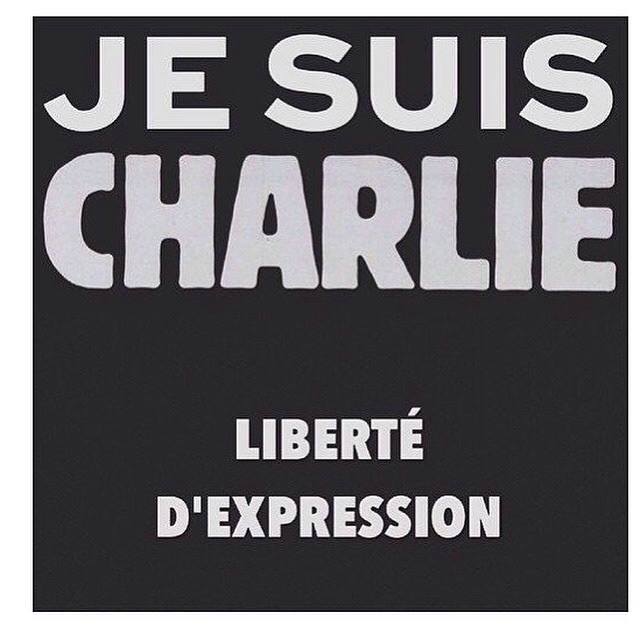
The Best Response to Terrorism is to Defend our Liberal Institutions. Freedom of Expression is Paramount in a Free, Tolerant, Society!


View image on TwitterFree expression and democracy were attacked with lethal force today by religious extremists in France. The so-called jihadists murdered a dozen people while shouting "God is Great." Of course, it's not Islam or the Muslim world that did this; only a few deranged individuals would support something like this.  Many Muslims are already condemning this terrorist act, though I bet some Islamic leaders will remain silent. 

Those who condemn this barbarism say that prophet Muhammad and the Koran do not support such actions. Same argument about the Bible. Both arguments are false. The holy books contain many passages in favor of killing others who are simply of a different faith or decide to leave their faith.

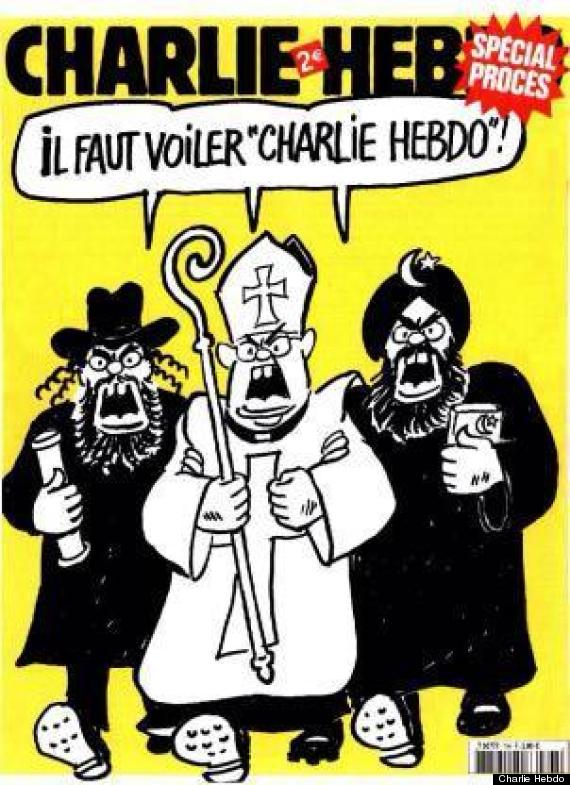
veiled
With the changing of society, culture, and education, people developed a new morality, dropping the extremist dictates of their holy books. It's like a supermarket of convenience--picking what suits people and what's acceptable in a modern society. It is the lack of fanaticism, without sticking to strict interpretations of revealed morals and religious practices that has made our world better.

Richard Dawkins made a statement saying that non all religions are equally violent. He probably means at present time, as by faithful extremists.There a few, like Jainism who are, by doctrine, non-violent. If you're an Jainism ..extremist, you are the least violent; you may worry about killing any form of life, including insects, and the tiniest creatures. Extremism in the vast majority of religions, on the other hand, results in lots of violence, and history proves this.

So, how do you deal with moronic terrorists who are hell-bent in applying their trade? Obviously we cannot reason with them. The freedom we offer them is not something they want to extend to others. But, we cannot succumb to their threats; we should not change the conditions that make our society more free and liveable. Probably this action will embolden the crazies home and abroad. But, the US and western-type countries should react with restraint and maturity. There are many Muslims who do appreciate the so-called western regimes, either by living in them or wanting to immigrate to them. We have to show confidence in our institutions and that we can handle crises like today's.
View image on Twitter 
We shouldn't paint all Muslims with a wide brushstroke. What I see is that religious fervor coupled with ignorance can result in terror; and terrorism is often inspired by religion. At this time, Islam fuels the hatred of many fanatics. Again, when people become more secular, educated, have a decent life whereas basic human needs are fulfilled, then extremism fades, or is found with the mentally disturbed. Yes, there have been extremists who were educated and well-to-do, but they were also religiously rejected the fruits of the Enlightenment

I do respect people making their own choices as how to live their lives, but unfortunately this is not a universal belief. Liberal democracy and, in general, western civilization is often considered a threat to traditional societies, entrenched religion, and hard conservatives everywhere. Is it a clash of civilizations like Samuel Huntington has argued? That after the Cold War, the sources of conflict would be cultural, ethnic, religious, and not economic or democracy v. authoritarianism.  I think it is the conditions, the context within people operate that is the most important factor.  Change this and gradually you see new people emerge. For example, a single most important variable is the status of women in a given society. Raise their status and beautiful things happen!


December 17, 2014

Ignorance Usually is not a Good Defense, Unless You're a Conservative Running for Office and Appealing to Idiocy

"I'm not a scientist," it's the excuse many politicians use to avoid answering controversial questions, like climate change, evolution, age of earth, etc. Of course, most of us aren't scientists, but use the products of science every day. And, most of us are alive, because of science. We doubled human life expectancy in the last 100 years, cured diseases, reduced infant mortality (and mothers' mortality at childbirth), went to the moon, understand a lot more about the universe, and we made our lives more comfortable because of science. So, science works.

What works actually it's the method of discovery, acquisition of knowledge, forming and amending scientific theories, and seeking the facts and the truth. Unfortunately, many Americans don't really understand what the scientific method is. There are several reasons for this. One is the strong influence of religion, which is much higher here than in other advanced countries. In addition religion has been meddling in education. Another reason is the failure of schools to teach what science and the scientific method is.

Education has to be knowledge, but what kind of knowledge? Memorization & repetition without understanding isn't the goal. Education, like science, should be a tool for knowledge. In this sense, it's more important how you thing than what you think about.

We may not be scientists but we must understand what science is and what it does. Democracy depends on the people's understanding of issues, engagement, and prudence. It's obvious that the quality of a system depends on the quality of the people involved. Ignorance doesn't serve the good political life--nor life in general.


"I'm not a scientist"

It's tiresome, to say the least, that leaders use this lame line. They are either ignorant or lying or both. If they're ignorant, they should recuse themselves from making public policy on issues they don't understand. They should stop promoting idiocy like, there's got to be two sides to the story, or teach the controversy, or there's no unanimity... Please, stop this nonsense. As leaders they should try to elevate public discourse by speaking carefully about science, the facts, and reality than by appealing the lowest common denominator.

Here's an ignorant person, a former governor of Florida and a member of the Bush clan, who is seriously exploring running for president of the U.S.


 Let the circus of the Republican/conservatives/tea partiers begin. It'd be hilarious if it didn't have serious implications on our public discourse.

December 10, 2014

CIA (and not only) Torture is Not Appropriate for Our Country if We Want to Champion Human Rights and Uphold the Rule of Law & International Treaties

I just read that royalty watchers were stunned by a basketball star's touching her royal highness, the breeder of a future king of Britain. Horrors. What's next? Pitchforks, tar and feathers? Frankly, I don't understand why there's so much media coverage for such a banal scripted activities of some of the most boring people on this planet. Anyway, I guess people need a circus show.

Meanwhile, the US Senate released a report about the CIA's torture practices. Yeah, pretty bad stuff. Torture is illegal and--I know I'm trending into controversial territory--immoral. No matter how it's labeled--like "enhanced interrogation--it's barbaric, unworthy of a society that wants to claim it abides by the rules of law, international treaties it has signed, and a champion of human rights.

What's interesting, and buried in the report, is that torture did not produce actionable information. Of course, many of our own experts had said that many times in the past. The torturers copied the brutality of some of our enemies. I imagine that if we watched a movie of Americans being treated the same way by some foreign language speaking torturers, we'd be calling for the annihilation of those savages and their organizations or countries.


From the Think Progress site, here are 17 facts in the Senate's report on torture. By the way, this is just about the CIA. There were other US agencies, including the military, that used torture. Remember Abu Graib prison in Baghdad?  


Below are just some of the most damning findings from the Committee’s report:
1. Torture did not lead the CIA to the courier who ultimately helped capture Osama bin Laden.
“The most accurate information on Abu Ahmad al-Kuwaiti — facilitator whose identification and tracking led to the identification of UBL’s compound and the operation that resulted in UBL’s death — “obtained from a CIA detainee was provided by a CIA detainee who had not yet been subjected to the CIA’s enhanced interrogation techniques; and CIA detainees who were subjected to the CIA’s enhanced interrogation techniques withheld and fabricated information about Abu Ahmad al-Kuwaiti.” [Page 379]
2. CIA personnel objected to torture techniques, but were “instructed” by the CIA headquarters to continue.
“The non-stop use of the CIA’s enhanced interrogation techniques was disturbing to CIA personnel at DETENTION SITE GREEN. These CIA personnel objected to the continued use of the CIA’s enhanced interrogation techniques against Abu Zubaydah, but were instructed by CIA Headquarters to continue using the techniques…”Several on the team profoundly affected.. .some to the point of tears and choking up. [Page 473]
3. The two psychologists who helped the CIA create the torture techniques earned over $81 million.
“In 2006, the value of the CIA’s base contract with the company formed by the psychologists with all options exercised was in excess of $180 million; the contractors received $81 million prior to the contract’s termination in 2009. In 2007, the CIA provided a multi-year indemnification agreement to protect the company and its employees from legal liability arising out of the program. The CIA has since paid out more than $1 million pursuant to the agreement.” [Page 11]
4. Colin Powell was not briefed on CIA interrogation methods because he would “blow his stack”.
“At the direction of the White House, the secretaries of state and defense – both principals on the National Security Council – were not briefed on program specifics until September 2003. An internal CIA email from July 2003 noted that “… the WH [White House] is extremely concerned [Secretary] Powell would blow his stack if he were to be briefed on what’s been going on.” Deputy Secretary of State Armitage complained that he and Secretary Powell were “cut out” of the National Security Council coordination process.” [Page 7]
5. The CIA used rectal feeding on detainees.
“At least five CIA detainees were subjected to “rectal rehydration” or rectal feeding without documented medical necessity. …Majid Khan’s “lunch tray” consisting of hummus, pasta with sauce, nuts, and raisins was “pureed” and rectally infused. [Page 4]
6. CIA leadership refused to punish an officer who killed a detainee during torture session.
“On two occasions in which the CIA inspector general identified wrongdoing, accountability recommendations were overruled by senior CIA leadership. In one instance, involving the death of a CIA detainee at COBALT, CIA Headquarters decided not to take disciplinary action against an officer involved because, at the time, CIA… In another instance related to a wrongful detention, no action was taken against a CIA officer because, “[t]he Director strongly believes that mistakes should be expected in a business filled with uncertainty,” and “the Director believes the scale tips decisively in favor of accepting mistakes that over connect the dots against those that under connect them.” In neither case was administrative action taken against CIA management personnel.” [Page 14]
7. The CIA tortured innocent people.
“Of the 119 known detainees that were in CIA custody during the life of the program, at least 26 were wrongfully held. Detainees often remained in custody for months after the CIA determined they should not have been detained….Other KSM [Khalid Sheikh Mohammed] fabrications led the CIA to capture and detain suspected terrorists who were later found to be innocent.” [Page 485]
8. The CIA held an “intellectually challenged man” to use as leverage against his family.
“[A]n “intellectually challenged” man whose CIA detention was used solely as leverage to get a family member to provide information, two individuals who were intelligence sources for foreign liaison services and were former CIA sources, and two individuals whom the CIA assessed to be connected to al-Qa’ida based solely on information fabricated by a CIA detainee subjected to the CIA’s enhanced interrogation techniques.” [Page 12]
9. The CIA intentionally mislead the media to “shape public opinion.”
“The CIA’s Office of Public Affairs and senior CIA officials coordinated to share classified information on the CIA’s Detention and Interrogation Program to select members of the media to counter public criticism, shape public opinion, and avoid potential congressional action to restrict the CIA’s detention and interrogation authorities and budget.” [Page 8]
10. CIA officers threatened to kill and rape detainees’ mothers.
“CIA officers also threatened at least three detainees with harm to their families—to include threats to harm the children of a detainee, threats to sexually abuse the mother of a detainee, and a threat to “cut [a detainee's] mother’s throat.” [Page 4]
11. The CIA dismissed information that wasn’t obtained through torture, even though it proved to be true.
“KSM’s reporting during his first day in CIA custody included an accurate description of a Pakistani/British operative, which was dismissed as having been provided during the initial “‘throwaway’ stage” of information collection when the CIA believed detainees provided false or worthless information.’” [Page 82]
12. CIA torture techniques included mock burials and use of insects.
“(1) the attention grasp, (2) walling, (3) facial hold, (4) facial slap, (5) cramped confinement, (6) wall standing, (7) stress positions, (8) sleep deprivation, (9) waterboard, (10) use of diapers, (11) use of insects, and (12) mock burial.” [Page 32]
13. Some interrogators had previously admitted to sexual assault.
“The Committee reviewed CIA records related to several CIA officers and contractors involved in the CIA’s Detention and Interrogation Program, most of whom conducted interrogations. The Committee identified a number of personnel whose backgrounds include notable derogatory information calling into question their eligibility for employment, their access to classified information, and their participation in CIA interrogation activities. In nearly all cases, the derogatory information was known to the CIA prior to the assignment of the CIA officers to the Detention and Interrogation Program. This group of officers included individuals who, among other issues, had engaged in inappropriate detainee interrogations, had workplace anger management issues, and had reportedly admitted to sexual assault.” [Page 59]
14. One interrogator played Russian roulette.
“Among other abuses…had engaged in ‘Russian Roulette’ with a detainee.” [Page 424]
15. The CIA tortured its own informants by accident.
“In the spring of 2004, after two detainees were transferred to CIA custody, CIA interrogators proposed, and CIA Headquarters approved, using the CIA’s enhanced interrogation techniques on one of the two detainees because it might cause the detainee to provide information that could identify inconsistencies in the other detainee’s story. After both detainees had spent approximately 24 hours shackled in the standing sleep deprivation position, CIA Headquarters confirmed that the detainees were former CIA sources. The two detainees had tried to contact the CIA on multiple occasions prior to their detention to inform the CIA of their activities and provide intelligence. [Page 133]
16. The CIA tortured detainees in a dungeon.
“Conditions at CIA detention sites were poor, and were especially bleak early in the program. CIA detainees at the COBALT detention facility were kept in complete darkness and constantly shackled in isolated cells with loud noise or music and only a bucket to use for human waste. Lack of heat at the facility likely contributed to the death of a detainee. The chief of interrogations described COBALT as a “dungeon.” Another seniorCIA officer stated that COBALT was itself an enhanced interrogation technique.” [Page 4]
17. The CIA spent hundreds of millions of dollars on the torture program.
“CIA records indicate that the CIA’s Detention and Interrogation Program cost well over $300 million in non-personnel costs. This included funding for the CIA to construct and maintain detention facilities, including two facilities costing nearly $X million that were never used, in part due to host country political concerns. To encourage governments to clandestinely host CIA detention sites, or to increase support for existing sites, the CIA provided millions of dollars in cash payments to foreign government officials.” [Page 16]

August 20, 2014

Stop the Militarization of Law Enforcement and the Brutalization of Our Society! [Yes, in the USA]

There's a saying, the treatment or medicine should not be worse than the disease. We don't have to go to extremes to find safety and establish a decent, pluralistic, open, democratic society. We don't need to carry guns everywhere to guard against someone who's armed with bad intent. We don't need to be locked up, or locked down to be secure. The safety of the solitary confinement is undesirable. 

America the home of the brave should not be a militarized zone. America the land of the free should allow free speech even if it's part of a demonstration. Yes, liberal democracy can be inconvenient at times. It's the price we pay for such. Same with free speech--you will be offended; you will be exposed to stuff you don't like, you don't agree with, or even to hate speech. But, there are huge advantages to a liberal society...

>>>The following video contains graphic violence. The police shot dead a man who's apparently distraught. What makes it appalling is that the police first lied about what actually happened, and secondly they were very trigger happy. This is what I call very excessive violence that many police are prone to. This must change. We should not allow our society to be militarized and brutalized!<<<
 

As far as the recent events whereas the police have shot or mistreated people that led to protests, there's a justified outrage. I want to believe that most police are decent human beings, but there are many who are just tools; many that need lots of training--in sensitivity and skills. These law enforcement tools need to be taught that their job is protecting the public, our institutions, people's liberties, and our civil rights. They're hired to do a job that does not include combat duty. They should be dressed for the job they have not the job they may want. What's up with the military camo outfits? This is not the jungle or the desert! This is not warfare. Isolate the violent elements and deal with them appropriately, like police do in any country that wants to be civil and democratic.

What's up with the tanks, mine-resistant vehicles, machine guns, snipers, and use of brutal often lethal force? It's abhorrent. I resent going to a block party, a county fair, 4th of July fireworks, and other public event only to be greeted by military police with all sorts of heavy equipment. Why small peaceful towns all over the country that have a few dozen police officers need SWAT teams and military equipment? The Homeland Security Dpt [by the way, what an awful name this is] was the creation of a hysterical nation, a belligerent neocon administration and a immature Congress. I doubt more than a handful of people actually read the Patriot Act which was voted and signed summarily into law.

When a person is being watched and loses a sense of privacy, he is changed; he does not behave as a free person. When people demonstrate and are treated like criminals by law enforcement, democracy suffers. When the whole society is militarized and brutalized civil liberties/rights wither.

I was asked by a reporter recently to comment on the events in St Luis. I reiterated the points I'm making here in this post, plus I added that many people don't seem to separate events. Robbing a store is a thuggish act, a criminal behavior, but as long as it's no life-threatening there is not need to use lethal force to a) protect or recover property and b) to stop the perp by killing them.  Apparently the idiotic leaders in MO thought that by releasing a video of a person stealing stuff from a convenience store makes it easier to pull the trigger! Watch the video above, from another recent incident, and tell me why the trigger-happy police had to kill that person.

I also don't approve of the looting. Undoubtedly there are some individuals who thrive in mayhem and exhibit unlawful if not violent behavior. Some find the opportunity to personally profit. But, I can understand the rage when confronted by military force or brutalized by the police. I've seen it and experienced it first hand during the Occupy movement. There's no shortage of tools, poorly trained, and/or psychologically unfit law enforcement that sadly are allowed to do what they want not what their job is. This has to stop now.


August 11, 2014

Religion Guides Conflict in the Middle East. History Shows that Solutions & Peace Come when Religion is Put Aside not when Combadants are Informed by it.

Why people take important actions or why they choose to believe certain myths is fascinating to me. Often it's not about evidence and reason, but it's about culture, purpose, and wishful thinking. If it were about reason and ascertainable facts, there would be lots more consensus on reality!

Recently I had a conversation with a colleague about the role of religion in the many conflicts in the Middle East. I argue that religious beliefs dictate to a great extent what's been happening there. This is not to say that there aren't other causes and factors, but if the participants were not religious, I bet they'd behave much differently. There wouldn't be a Jewish state or dreams of a caliphate or that God clearly has taken sides in the conflict and rewards his believers.

More traditional societies are more affected by religion. Modern states, especially the ones that have adopted liberalism, have been increasingly separating church-state; not so the regimes in the Middle East, though Israel is the only state that has strong elements of a secular democracy. Unfortunately, the Israeli government caters too much to the conservative Orthodox, who are motivated by strong religious dogmas. But, the vast majority of Jews don't take their Bible too literally. Like most Xtians have already done so. It would be reprehensible, and immoral--according to our modern sensibilities--to act as the Bible prescribes, especially in the Old Testament. Apparently many Muslims are still very fundamentalists and are in favor of theocracy.

As to the latest conflict, there's no easy or agreeable timeline of responsibility. Several peoples live in small contested land for thousands of years. The Balkans used to be like this, but it was easier to form countries with fixed borders. There were wars, exchange of populations, genocides, and religious conflict. But also there was more room to move and adjust the borders. Palestinians, Jews, and Christians all lay claim to this relatively small parcel of land in the Middle East.  Hamas began to fire rockets into Israeli civilian territory a few weeks ago. We have to ask, why did Hamas do so and what did they hope to achieve?

Those rockets couldn't seriously hurt Israel but certainly did provoke a violent reaction. Hamas knew that lots of innocent Palestinians would die if Israel retaliated--which it did. Are we closer to a solution today? I wonder. I am not excusing Israel's heavy hand, before and during the war. Let's say, however, that Hamas was in charge--with a big military force--and there was a Jewish minority. I don't think it'd take much guessing as to how Hamas would deal with the problem. 

I took the trouble to pour through Hamas' Chapter (Covenant). There isn't one paragraph that doesn't mention religion. The whole point of it is to eradicate the Jewish population from Palestine and establish a strict theocracy! A few days ago, NPR had a story about a young Hamas fighter who was killed. His mother kept saying “praise God” and that her son asked her to “pray for him” (before any mission). He had saved a few thousands of dollars “to get a bride” and if he was killed before that he asked his mother to spend the money on a hadj to Mecca! Praise God. This is a motivating factor for so many people. If they’re convinced that God is on their side and they’re going to heaven, especially as martyrs, even if it means killing infidels or fellow Muslims who don't have the correct version of God….

ISIS--the fanatics from Syria who have spread in Iraq is a prime example of religious lunacy. ISIS' public executions, the practice of a barbaric understanding of religion, and the fanaticism of its fighters is so extreme that even Al Qaeda rejected them. ISIS rose because those crazies are well armed, and financed, so such people tend to do well against corrupt, inefficient states, armies, etc.  If ISIS were smarter, they should copy Hezbollah, go into territories and instead of absolute terror they would improve the lives of citizens by providing needed services the Syrian or Iraqi state hadn’t. Now the US is using air strikes to push them back.

There are stark differences between those who recognize no limits to their armed struggle--anything goes at any price--and those who have the power but recognize restraints. For me at least this is important. Furthermore, I do not like theocracies of any kind. Humanity deserves better. Like I. Kant said sometime ago, this can be an age of enlightenment.... but only if we want it, because we choose to leave our immaturity behind.


June 28, 2014

M. E Boundaries are Inviolable.


Exactly 100 years ago Archduke Franz Ferdinand was killed in Sarajevo on June 28 , 1914. His assassination set off a series of actions and counter reactions that ended up in one of the greatest tragedies of the 20th century, World War I. This tragedy is relevant to us in more than one way. Obviously the most basic reason for recognizing this day is the hope that the more we think about these tragic events the less likely humanity will be subjected to them again. But another important reason for us is the idea that WW I was a perfect example of unintended consequences. No one wanted to start a world war but the assassination spiraled out of control and ended up in a war that lasted for over 4 years , and resulted in an estimated 37 million casualties.. But there is another reason for us to think about this issue and that is that it culminated in freeing the ME from 400 years of Ottoman rule.

So many articles and thinkers have written about how is it that we might be witnessing the end of Sykes Picot, an agreement that is often described in negative terms by Arabs and many even go as far as to claim that all our problems, and there are so many, can be traced to the political subdivisions that were drawn after the fall of the Ottoman Empire.

I do not subscribe to that vision except in one detail. One can argue very convincingly that had it not been for WWI, the resulting Mandate and the Sykes Picot agreement then possibly the Balfour declaration/Promise might not have been issued and the ME would have been spared the last seventy years of instability related to the establishment of the state of Israel. But if we are to set aside the Balfour Declaration then I cannot find much that is at fault with Sykes Picot.

Note that  Figure1 is a map that would make it clear that the whole of the Arab world, including
North Africa, was ruled by the Ottoman Empire for four centuries . Roughly1516-1916.
                                                                
                            Figure 1: Ottoman Empire Arab World was under Ottoman Rule of Selim I
      
 Then in 1916 the infamous Sykes Picot subdivided part of the Ottoman Empire into two regions of influence, one British and one French. (figure 2) .
                  Figure 2: Note that Sykes Picot did not establish boundaries but only spheres of influence

The Sykes Picot agreement resulted in about 25 years of the
 Mandate Figure 3.

         Figure 3: The Mandate powers proceeded to carve out the current countries.(The French gave away Alexandreta to Turkey and initially planned an Alawite Republic as well as a Druze one).

 The two Western powers of France and Great Britain divided the area taken away from the Ottoman Empire into the current major countries of the M.E. Figure 3.
After Sykes Picot gave each of the two European powers an area of influence they then proceeded to carve up the countries that make up the current Middle East. But each of the countries created was able to become independent by the mid 1940’s. Figure 4.
                                     Figure 4: The current boundaries and dates of independence

This is an important point since it makes it clear that the mandate which created the boundaries between Lebanon, Syria, Iraq, Jordan and Palestine/Israel lasted only for 25 years.  
Based on the above and the accompanying maps one needs to ask again whether it was the 25 year mandate or the 400 year Ottoman rule that played a more crucial role in shaping the identity and culture of the people in this region.

If, as it is often claimed, that the current political borders created by the mandatory powers after the Sykes Picot agreement created political divisions that are not acceptable then why weren’t there any major movements to correct that flaw and redraw the borders. It is easier to protest a perceived injustice but is more difficult to prove that such an injustice has taken place. Would it have been better to the inhabitants of the mandated areas had these artificial boundaries not been created? Is there a shared national identity between the residents of these countries in question and are they ready to accept the other and accept the demands of democracy and responsibilities of citizenship that would be required in an efficient modern state? Even if the answer is yes then wouldn’t it be better to create a federation where each of the member states can control its own internal affairs.

I am willing to be a Giraffe ;put my neck out J; by saying that the “death of Sykes Picot has been exaggerated” and that the current map of the ME would hold with very little changes , if any. Ideally the most important radical change would be the settlement of the Israeli Palestinian question. The Kurdish issue would not be so much of a problem had Syria, Iran and Turkey been able to treat all their citizens equally, an autonomous Kurdish region might be the only other alteration of the current inviolable boundaries. I imagine that I am saying that ISIS will not fulfill its wish. No backward thinking group of people ever do.  


Figure 4 The mandate was relatively short lived.

June 10, 2014

Democracy Depends on a Consensus. Often, non-Optimal Choices May Be Acceptable and Even Very Prudent

I had an interesting conversation with colleagues during lunch today and at least one said that they won't vote for Hillary Clinton should she run for president. Some of the reasons cited was that she's openly for big business, that she didn't do anything while at the State Department, and that it's not appropriate to have an oligarchy of the Bushes and Clinton.

Well, I get all that, but in a democracy--as many times in life--we, personally, don't have the ideal choice. We may not have great choices either. We often take the "lesser of the two evils" and it makes sense, especially when one is truly evil, as I believe any serious Republican contender has been in my lifetime and will be in 2016.

Plus, elections have consequences as they can steer the country in a certain direction, elevate certain priorities, and articulate ideas. Successful policies, despite their flaws, convince people about their merits. Let's not forget, many people are conservative--can't imagine in the abstract or analyze ideology. There are many narratives out there. Sure, leadership matters, and that's why we have so many people choosing the ridiculous and want a society more fit for the Dark Ages. However, once they see that, say, Obamacare is generally good, that same-sex marriage doesn't destroy a state, etc, they accept it.

In the same light, I don't think most people readily accepted the ideas of the Enlightenment, of liberalism, or of civil rights for everyone. But, once those took hold (often imposed by elites like Jefferson, Madison, et al), people accepted them. We can see this today in our own country, from state to state--different sub-cultures with very opposing views on, say, gun control, religion, sex, political parties choice, etc. This also shows that most issues aren't decided on their merits, on evaluating the facts, because otherwise we wouldn't still be debating whether humans are responsible for global warming, evolution (and science in general), and the age of the Earth!

In yesterday's NYT, C. Blow's oped titled, "Religious Constriction," makes a similar point about the religiosity of our citizens--highest among affluent countries. You have to look to Greece, Italy, and the oil-rich Gulf countries to find higher religiosity. I maintain that--for most domains, issues, ideas, morality--if religion informs opinion then, most certainly, it's wrong, and imprudent. It is precisely because such opinions are held by so many of our citizens that we don't see the progress we could get nor do we solve many of our own problems.

***
 
I have to give another shout to a favorite, Paul Krugman, who he recently wrote [link] along the same lines of my argument:

"The fact that climate concerns rest on scientific consensus makes things even worse, because it plays into the anti-intellectualism that has always been a powerful force in American life, mainly on the right. It’s not really surprising that so many right-wing politicians and pundits quickly turned to conspiracy theories, to accusations that thousands of researchers around the world were colluding in a gigantic hoax whose real purpose was to justify a big-government power grab. After all, right-wingers never liked or trusted scientists in the first place.

So the real obstacle, as we try to confront global warming, is economic ideology reinforced by hostility to science. In some ways this makes the task easier: we do not, in fact, have to force people to accept large monetary losses. But we do have to overcome pride and willful ignorance, which is hard indeed."
 

February 17, 2014

Some Thoughts on President(s)' Day

President(s)' Day today honoring... well, whatever states want, though the federal holiday is about George Washington who was born not today (2/17th but on the 22nd). Several states mark the occasion differently. Guess what? Lincoln's birthday (2/12) is included in this except in the South. I wonder why. So the third Monday in February is set for "president(s)" to sell all sorts of consumer stuff and some patriotic version of history.
The General with a maid in his headquarters, Newburgh, NY


I feel patriotic, so stop the caustic emails. But, this doesn't prevent me from trying to learn about the truth--as much as it can be ascertained--and examine causes and effects. Let's start by asking, what is patriotism? And, where, why did it start? The notion of patriotism begins with the notion of patris--country. So, how did the British citizens in the 13 colonies see themselves in the 1770s?


Musket warfare
Under the mercantile economic system, there was a zero-sum game: for every winner it had to have a loser. The colonies were a source of wealth for the then empires, and under imperial policy, the colonies were there to exploit the local resources and populations for the benefit of the mother country. It was forbidden for the colonies to trade with anyone else. But, that didn't prevent the American colonists from breaking the law to enrich themselves. When Britain turned the screws, they rebelled. Yes, the economic elites in the colonies had an economic reason for self-governance and thus a revolution.

The Tea Party rebellion? Well, it was triggered by Britain's decision to give the East India Co. the monopoly of the tea trade, thus crippling American economic interests, not withstanding that the EIC tea was cheaper and of better quality. The colonies had enjoyed a relative independence to conduct their own "internal" affairs and the New World had unique conditions, like the reality of the expanding frontier. All these factors made for a different breed of a citizen. 
 
Harbrouck House, New Paltz, NY.

Yet, even at the break of the revolution, most Americans in the colonies [let's not forget they were other "Americans" in the continent too] were British citizens. Even the Declaration of Independence demonstrates that the colonists believed they were denied their British rights of life, liberty and property, and, therefore, had a right, indeed a duty, to replace a government after a "long train of abuses."

The ideology of liberalism with its "natural rights for every man" that came out of the Enlightenment was used as the foundation of the regime of the new country to be. But, it would take a long time to turn those Americans into patriotic United States of America citizens. Patriotism primarily evolved along with the formation of the modern state in the last 2-3 centuries. Allegiance was to one's own tribe, ethnic or religious group, and later to a city-state or a larger state, like New York. Most Americans then identified their loyalties to their particular states, not the US. Fully 1/3 of the colonists remained loyal to Britain; most were expelled, many were killed, a few remained.


Class System, Order of the Universe

The belief that the universe had an ordained, divine order was widespread. A rigid class system prevailed too. Yes, it was possible for merchants to elbow their way into the upper caste--like the despised nouveau riche by the "old money" aristocracy--but everybody "knew their place." Old Europe operated on this scheme, so it's amazing that the ideas of liberalism sprouted and even used as ideals for a new state/country. Of course, anyone who has watched docudramas of the last 200 years or has visited the mansions of the rich knows how society worked those days.

The elites often went to war against each other for power and wealth, but they had their code of honor which meant that death would be visiting primarily the lower-class soldiers and civilians. It was against military honor to shoot at officers of the opposing army! George Washington could have been killed by British snipers on a couple occasions but he was spared because he was an officer. The Americans didn't shoot at British officers either...  Well, some American riflemen, often despised by both sides, broke this code by indiscriminately killing British infantry and officers. Nowadays, taking out the enemy command is standard military strategy; not back then, which is incredible if you think about it. The thinking, I'm going to let the enemy generals be so their army can be more effective against me and my side, is totally crazy unless....

At first, it seems natural that the French would side and aid the American colonists in their war of independence. The enemy of my enemy is my friend, as they say. But, it was a troubling decision since rebelling against the crown was a no-no among all royal houses of Europe. Yes, royal factions could engage each other, even in civil war, but challenging the notion of monarchy was evil. 

George Washington could have been king after the revolution, though to his credit he did not wish it and admonished those who proposed a monarchy for the new country. While in Newburgh, NY, he communicated with many domestic leaders and urged for a constitutional republic. The constitution of 1787 provided a blueprint for a federal country, which is still evolving today. Many of the good changes and ideas come from the top, the educated elites, but also as the result of bloody conflicts.

The country the presidents we're celebrating today knew is much different today, and I think for the better. It's OK to appreciate the effort and the good ideas of past leaders, but I don't think we need to idealize-idolize them. Some were very progressive while most were trapped in their time & culture. There's no divine order in human society; it's what we make of ourselves, our understanding of the important issues, and the policies we can muster for a good life for every citizen, indeed a human being.
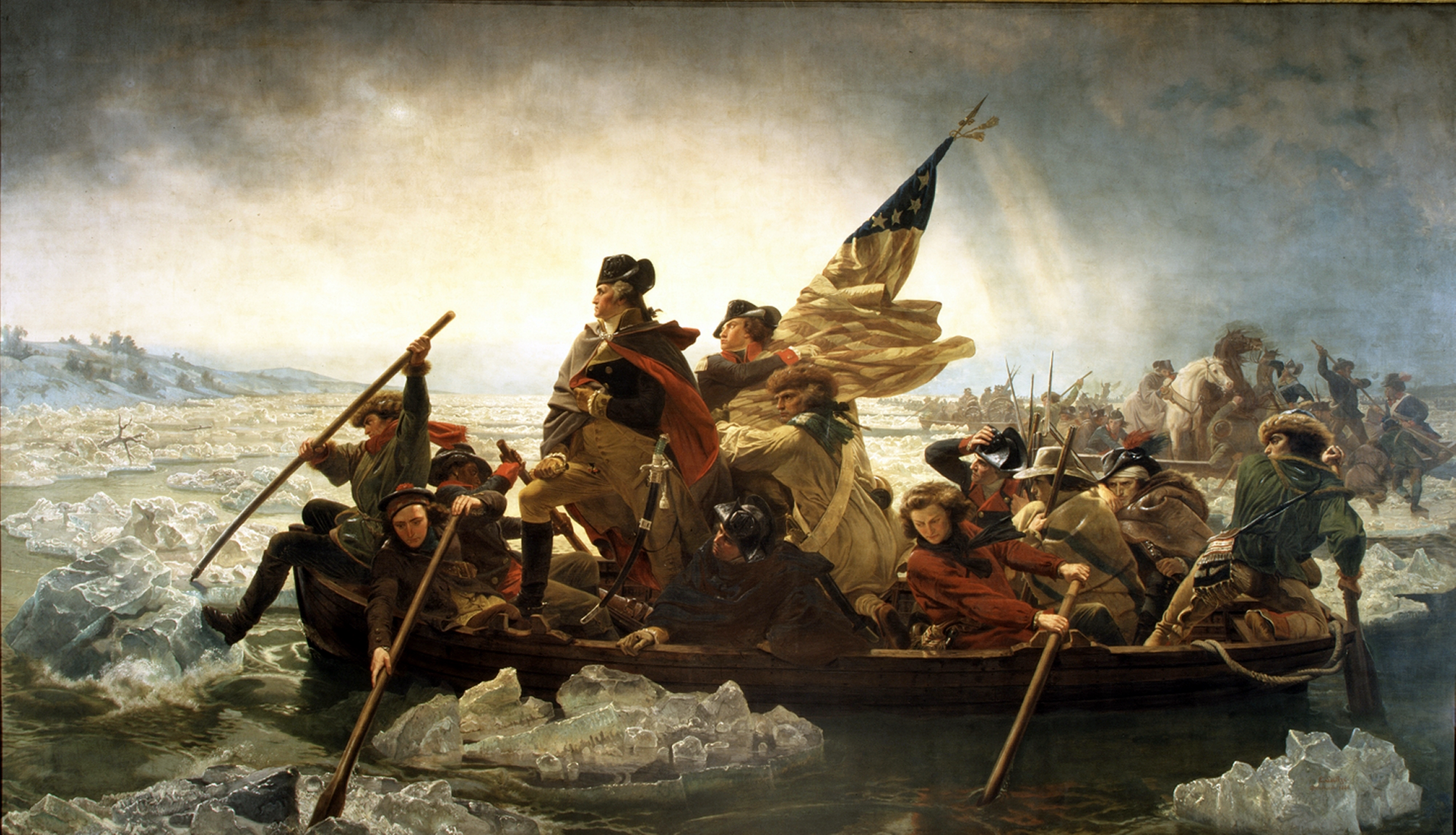
Fictional rendition of the Delaware river crossing. (note the American flag)