June 03, 2010

A Curious Life is Worth Living

I have lots of questions but not as many answers--I realize how little I know, but that's not necessarily a bad thing. Those who believe they know everything they have no need to learn anything else. Of course, everyone is entitled to their opinions but not to their facts.  We can disagree based on our values and priorities but there's got to be some mutually accepted reality.

Now, that's the problem: How we perceive reality, methods of acquiring knowledge, and standards of evidence. Fortunately, we do have methods of inquiry and logic. Unfortunately, they are often discarded in lieu of confirmation bias, lack of interest in asking questions, and personal identity issues.

Since at least the ancient Greeks, we have the fundamentals of reasoning and the scientific method but even after thousands of years and many civilizations later we don't seem to want to learn. We still cling to primitive taboos, superstition, and willful ignorance. It's very frustrating to see a preference for old inadequate answers to some big questions. Many students aren't interested in learning other than the basic mechanics of a profession that will enable them to become rich... That's how most young college students perceive their efforts and expectations.

Perhaps it's only in the US where a highly advanced country with lots of scientific talent and research has such great numbers of people who are basically anti-science. That's why in several states (yes, where religion is the strongest) they're still debating about the validity of the theory of evolution--one of the strongest scientific theories we've got!

At any rate, for those of us who are awed by the richness of the universe and the thrill of scientific exploration, it's worth watching Brian Cox lecture at Ted. Enjoy--as I know you will.


" Look again at that dot. That's here. That's home. That's us. On it everyone you love, everyone you know, everyone you ever heard of, every human being who ever was, lived out their lives. The aggregate of our joy and suffering, thousands of confident religions, ideologies, and economic doctrines, every hunter and forager, every hero and coward, every creator and destroyer of civilization, every king and peasant, every young couple in love, every mother and father, hopeful child, inventor and explorer, every teacher of morals, every corrupt politician, every "superstar," every "supreme leader," every saint and sinner in the history of our species lived there--on a mote of dust suspended in a sunbeam"
 Carl Sagan on the occasion of the Voyager taking a picture of Earth in 1994, 4 billion miles away.

May 15, 2010

Arab Israeli Peace: One Last Chance?


If the Arab Jewish conflict in all its phases is to be looked upon as a continuum then its duration is getting very close to becoming the longest war in History. It could eclipse the Hundred Year Wars between the British and France which lasted from 1337 to 1453. Jews had started immigrating to Palestine under the Ottoman Empire rule late in the 19th century but the Zionist movement picked up support as a result of the Balfour Declaration of 1917.

The UN plan of 1947 recommended partition; under the infamous UNSCR 181; but on the day that the British mandate ended May 14, 1948 Israel was declared as an independent state. The Arab league declared war against the new state of Israel but its forces were defeated which resulted in having the Israeli forces in control of most of mandated Palestine and forced the Arab states to sign an Armistice agreement which still represents the internationally recognized borders of Israel. The tentative peace that followed lasted less than seven years. Israel joined the British and the French in their Suez Canal War by attacking and capturing the Sinai and the Gaza strip in October of 1956.


An uneasy peace lasted this time 11 years. On June 5, 1967 the Israeli Air Force launched a preemptive attack on Egypt followed by one on Iraq, Jordan and Syria. When the six day war ended Israel had added to the Sinai, and Gaza, the West Bank and the Golan. This was followed by the 1973 war which started with promise for the Egyptian and Syrian forces but ended up in a cease fire.

Egypt managed to get the Sinai back as a result of the Camp David Accords signed in 1979 which were followed by a Jordanian peace agreement in 1994. Meanwhile Israel attacked Lebanon in 1982 in an effort to force the PLO forces that had been thrown out of Jordan. The PLO withdrew to Tunis and Lebanon signed a ceasefire agreement with Israel in 1983.

In spite of all the misery inflicted by all of these wars there was a genuine chance for peace. Besides Camp David of 1979 the Oslo Accords were signed in 1993 followed by the already mentioned Jordanian peace treaty of 1994 NS OSLO II in 1995. Unfortunately most the promise faded when Israel, in 2003, retook some Palestinian land in contravention of Oslo II. This has been followed by Israeli withdrawal from Gaza, the Lebanon war of 2006 in addition to the Gaza war of 2008.

So what has been achieved in almost a century of conflict besides the constant change of positions? The Israelis start in accepting a partition that is rejected by the Arabs and we move to the point when the Arabs accepted a two state solution which has not been accepted by the Israelis. The situation looks as hopeless as ever, if not even more so. But is it?

I saw today the rough outline of a suggestion by Zbigniew Brzezinski, the National Security advisor for Jimmy Carter, that is simple straight forward and I believe vey promising if the political courage is found to adopt it: President Obama must declare in a press conference that the US will spare no effort to forge an agreement along the following four points

(1) Declare that the right of return for the Palestinians will not apply to the pre 1967 Israel

(2) West Jerusalem will become the capital of Israel and East Jerusalem is to become the capital of Palestine.

(3) The 1967 borders with very minor modifications are to become the internationally recognized borders. Any agreed upon modifications will be based on a one to one ratio.

(4) The new Palestinian state will be demilitarized with NATO forces on the border.


The only question that is worthwhile speculating upon: If President Obama is to make such a commitment then would the rejectionists have any rational excuse to turn such an opportunity for peace down? What do you think?

May 07, 2010

Would the "Greek Tragedy" Go Global?


“Those who cannot learn from history are doomed to repeat it” This George Santayana saying is as true as it ever was. How else to explain the current international financial debacle de jour? It is rather disturbing that after all the handwringing about the worst financial crisis that the world has encountered in over seventy years and after so many have questioned whether capitalism as a system can survive that we keep on repeating the same mistakes over and over again. Karl Marx’s’ popular quip about how “History repeats itself first as tragedy then as farce” also seems to be tailor made for these rough economic times had the farcical not been so tragic.

Almost everyone who follows the news knows by now that the 2007-2008 economic meltdown, whose cost was estimated to be around $30 trillion, began in the United States before it spread all over the world. There is also a consensus that irresponsible behavior by financial institutions, their regulators as well as individual actors have contributed to the strength and depth of what could have been a second Great Depression. Greed was the most common word that has been used to describe what led to the economic crisis. Greed of institutions for larger and larger profits, greed by managers for bigger bonuses and the greed by individuals to live beyond their means. The financial wizardry of the new “rocket scientists” on Wall Street made all of this possible and then some. They developed new fancy instruments out of common mortgages and then did the same thing for bank loans. Loans and or mortgages were bundled and sliced then diced into so many tranches and sold separately with different levels of risk to anxious buyers all over the world. No one could have enough; neither the originators of these synthetic derivatives nor the buyers. It looked that the “masters of the universe” have created the magic formula that will transform subprime mortgages into AAA securities.

But in order to securitize mortgages and satisfy the insatiable demand for these securities more homes had to be sold and more potential buyers found. As the number of eligible buyers dwindled, as it must, the standards were loosened until there were no standards at all. Home owners bought homes they cannot afford and as prices of real estate went up many home owners decided to participate in the melee by using their homes as ATM machines. The charade went on until the market started to run dry of buyers and home prices cracked. As the prices fell millions of these subprime loan holders defaulted since they can not meet the monthly obligations neither could they sell. Many of those that took out second and third mortgages also found their holdings under water also. What started as a problem in one sector spread like wild fire all throughout the financial system since all players were interdependent and equally greedy to “dance while the music was playing.”

The crisis of two years ago made it apparent that both individuals and institutions had to deleverage their balance sheets which many have done. Regulators are still struggling with a solution to the “Too Big To Fail” but are making some progress in that regard. Unfortunately the lessons of the misbehavior , excessive risk and too much leverage were applied only selectively.

It turns out that the greed of governments was the most serious flaw in this system of international finance. Governments found a way to appease their populations through deficit finance. They offered benefits that they cannot afford and undertook expenditures on projects that are neither viable nor feasible. Actually these governments have mishandled so much of the borrowings that they had to find ways to keep the level of indebtedness off the books. Elected officials in many countries acted as if they have found the secret for wealth creation. Borrow the country into prosperity. For a while the scheme worked, just like subprime and the housing bubble did. But at some point the truth about the ability to repay the billions borrowed and squandered becomes known and the whole cycle of financial collapse gets started again.

That is what is becoming known as the Greek Tragedy or the Olympian Tsunami. Would the Greek Tragedy be confined to Greek soil? Don’t bet on it . The Greek Tragedy is about to become a contagion and there is no reason for it not to go global. After all we were not smart enough to have learned from our recent historical debacles and so we are doomed to repeat them.

April 23, 2010

Earth Day 2010


Forty years ago Earth Day was born and it validated what is perhaps the most promising social movement of the last century and arguably at least the last two centuries. Earth Day did not give rise to environmentalism as an idea but it sure helped spread the awareness and the concern that the nascent field of ecologism had fostered.

A popular movement, especially one whose concern is not limited by geography, ethnicity or religious belief does not just happen. It evolves as a result of deteriorating conditions in the status quo and it attempts to deliver a synthesis, if you will, of the conflicts that had arisen. In this case humans had been exploiting nature, abusing the natural endowment that is so critical for their survival as well as the survival of other species both in the plant and animal kingdoms. Human hubris had dictated to us, at least in the West, that we were created in the image of God, who gave us dominion over all other things on earth. These religious beliefs had become so well established that they contributed towards the creation of science, capitalism, colonialism and ecological degradation on a massive scale. Senator Nelson, the main organizer behind the first Earth Day celebration was merely attempting to provide a forum for individuals to express their concern about the direction in which the world was evolving and thus to empower people to challenge the prevailing orthodoxy that has already been challenged by Rachel Carson, Murray Bookchin, Arne Naess and others.

The world was very receptive to the idea that something radical needs to be adopted in order to meet the existential challenge that was facing all of us. Major environmental thinkers, like the ones already mentioned, to their credit saw the challenge not only in terms of open spaces, green grass, fresh water and clean air. They spoke of the need to create a just social order, a society that respects the individual rights but that is guided by the common good as well as global justice. They aimed for a world that is free of gender, religious, racial, ethnic or sexual exploitation; a non hierarchical structure. They argued and rather convincingly that we can never free nature unless we free ourselves of all the prejudices that dominate our relationships with each other.

Forty years ago a serious social movement became well established and even entrenched to save the world, to save us from ourselves and many of us responded with enthusiasm and energy. But only to be disappointed. The vision has been shattered and the accomplishments have been few.

What happened? What went wrong? The simple answer is that we have allowed the establishment, the one we were determined to fight, the order that we were supposed to challenge to co-opt us. Capitalism which was the nemesis of a healthy environment metamorphed into “green capitalism” the saviour , Incentive Based policies were adopted to restore health to an eco system devastated by the markets very own failures, affluence and affluenza are being promoted as a silver bullet for all what ails us despite the fact that over consumption is one of our seminal afflictions, complexity is still being promoted as a tool to become sustainable when the evidence is exactly the opposite and we persist in our belief that all of this was created for us, for the pleasure of the human species.

So far we have failed to address the issue of human population growth, we have made no progress in cleaning the polluted water that we have, climate change has reached a tipping point , grain stocks are the lowest they have been, conventional and non conventional energy are rapidly facing lower EROI; energy return on investment, the world is full and we are way above carrying capacity but what is most painful is that we have thus far allowed a revolution, a paradigm shift, to slip away from us for the simple fact that our concern is not genuine enough otherwise why would we have agreed to be sold for thirty of silver?

Earth Day

February 22, 2010

It Is Not Too Late If We Act Now

It is not very often that we get credible ecological news that is not full of bad news and projections. Well, I am glad to say that the following is a recent study that actually suggests that humans have not lost the race yet. Yes we are on our way towards catastrophic outcomes but we are not there yet and interestingly enough we can avoid the worst outcome if we are smart enough to change our ways and work meaningfully towards redemption.

The Stockholm Resilience Center, at Stockholm University is self described as a center of Research for Governance of Social-Ecological Systems. The Centre released a few months ago a major study undertaken by 28 world renown scientists in which they have established a new area in planetary management. Their first study describes nine planetary boundaries (listed at the bottom of this entry) that they believe humanity must not cross . The study goes on to say that human activity has thus far resulted in breaching three of these boundaries (the stared ones)but not the other six.

We are currently living in the geologic era known as the Holocene which started around 10,000 years ago. As we all know, it was during the Holocene that agriculture was developed, civilization prospered and industrialization became the norm. But unfortunately we are entering the Anthropocene, a new geological age in which human activities have grown as to form a major threat to the health of the earth.

Will we have the wisdom to adopt the right policies and change our behavior so as to avoid catastrophy? Yes we still can do that but time is quickly running out.

The nine Planetary Boundaries

1. Strategic ozone layer
2. Biodiversity
3. Chemical Dispersion
4. Climate Change ***
5. Ocean Acidification ***
6. Freshwater consumption & the global hydrological cycle
7. Land System Change
8. Nitrogen & Phosphorus inputs to the biosphere & ocean ***
9. Atmospheric aerosol loading

*** Transgressed boundary.

February 14, 2010

Pigouvian Taxes


Sovereign debt , as a potentially crippling fiscal problem world wide, has risen to the forefront over the past few months. Whether it is the US, Europe, Japan or many other developed and developing countries the sovereign debt watch is on.

The major metrics of a pending sovereign debt crisis that have been in vogue for decades used to be applied only to developing countries. Unfortunately this is no longer the case. The Herculian efforts by governments all over the world; the developed in particular; to avoid a repeat of the debilitating depression of the 1930's has forced these countries to increase substantially their fiscal stimulus programs. In a sense the monetary and fiscal policies adopted by the officials of all of these countries have been very successful. A worst case scenario has been avoided.

But as economics has always taught us, There Ain't No Such Thing AS A Free Lunch; TANSTAAFL. Yes we avoided a deep recession and the top officials can pat themselves on the back for this. But maybe not. Is the cure at least as expensive or maybe even more so than the ailment that it saved us from? That is , currently, the $64,000 question or maybe I should say the $64 billion question?:-)

Often, our efforts at prescribing remedies are counter productive because of what is inherent in problem solving. We always seem to target the symptom rather than the disease. As a result we inevitably move from one crisis to the next as a result of the law of unintended consequences.

In our efforts to save the system and to prevent a major economic depression we proceeded to throw money at the problem in order to generate more final demand and thus put more people to work. What we did not stop to consider is the major question of how are we going to pay back all of these funds that we have borrowed? It seems that we did what we always do, shift the burden onto the future generations. The debt will not come due for some decades ,right? Wrong.Well informed individuals know that more debt implies more taxes in the future and so they take corrective by refusing to own the highly risky debt. Once we find out that the debt service is too large and that we cannot keep on rolling the debt unto the future then we will have no choice but to become deadbeats. That is where we are at the moment. The question is which country is going to go under first? Would it be Greece or would it be one of the other PIIGS? How about the UK, or evn Japan or the US? If any of these countries default would they set up a contagion that will devastate all the current international financial sytem as we know it?

Believe it or not there is a potential mechanism that if adopted could go a long way towards addressing the real cause of this issue and not only the surface phenomenon. The solution that I am about to propose is not new, actually,N.G Mankiw wrote about it in 2007.

"The scientists tell us that world temperatures are rising because humans are emitting carbon into the atmosphere. Basic economics tells us that when you tax something, you normally get less of it. So if we want to reduce global emissions of carbon, we need a global carbon tax. ...

The idea of using taxes to fix problems, rather than merely raise government revenue, has a long history. The British economist Arthur Pigou advocated such corrective taxes to deal with pollution in the early 20th century. In his honor, economics textbooks now call them “Pigovian taxes.”...some taxes align private incentives with social costs and move us toward better outcomes."


I would love to see a carbon tax levied not only in the major industrial countries but all over the globe with all the proceeds dedicated to lowering the sovereign debt. Such a tax could be a first step towards internalizing the negative externalities of all the production inthe world economy. If that leads to less and more efficient production then all of us will be winners.

February 06, 2010

Another Attempt of Government Takeover. When Will This Assault on Our Right to be Exploited Stop?


You'd think it would be a no-brainer that instead of the US government giving money and guarantees to the lenders of student loans it could give the money directly to students or to colleges. Of course, that's "government takeover" and we know how free we want to be. Right? That's the argument, like soup de jour, being used by the freedom-loving conservatives today. Don't get me wrong, I often order the soup of the day--which has a different substance and flavor from place to place.

Of course, I don't want the government to take over my civil liberties, but if, as we proudly claim, the government is of, by, and for the people, our government has to provide equal opportunities to the people to reach their own potential. Freedom is connected to action, but without any good choices freedom doesn't mean much. If I'm only free to read, say, do "whatever" I want while being locked up in the basement, then this is not true freedom.

Likewise, I'm not free to pursue higher education if the price of attendance is out of my reach. Being free to choose from lender A or lender B isn't a good option if it means that either choice will bankrupt me by graduation day.... Assuming I could get those burdensome loans to begin with.

Four months ago, it appeared that Obama's proposal to overhaul the student loan business would materialize, but, guess what, the lobbyists haven't given up. Now, how would they succeed in stopping a sensible proposal [yeah, I know, they've done it many times before, stopping good legislation from going forward] in Democratic-controlled Congress? Want a wild guess? Money is buying votes in a climate of failed Democratic leadership to get things done.

Now that SCOTUS has ruled corporations have the same First Amendment rights the sky is the limit. Lots more corporate money will be available to educate the public now. It won't be long when corporations will obtain Second Amendment rights too.

I'd be remiss if I didn't mention that there's a critical mass of the American public that supports politicians who work against the public interest. Also, the phrase, "government takeover" apparently motivates millions of Americans to defend their freedom of choice to remain toothless!

January 30, 2010

The Hamster That Ate The World lol

A must see British video clip that illustrates the seminal idea upon which Herman Daly built his model of Steady State Economics (SSE). It is also important to remember that Mr. Daly never gave himself the credit for the idea, he always stressed that he borrowed the concept; or rediscovered it if you will; from the work of JS Mill.


January 06, 2010

The Flat Earth Society Is Alive And Doing Well In Saudi Arabia


As the world, at least most of the countries in the world, express concern and even regret over the failure of the Conference at Copenhagen to come to a meaningful conclusion the Saudi Arabian chief negotiator at the talks expressed Saudi Arabia’s glee and satisfaction that the Copenhagen Conference failed to take any positive steps towards meeting the most important challenge that civilization has ever met. Mr. Mohammad Al-Sabban went further as to predict that the world seems to be heading towards a stalemate on the question of anthropomorphic global warming, AGW. Mr. Al-Sabban proceeded on an interview on the BBC to predict that the action on climate change will become similar to that on the Doha round of the WTO. The WTO members have been engaged in negotiations for the past ten years with no resolution in sight.

It is shameful that a country takes pride in the fact that it is not likely for the world community to make any progress on the climate change issue for at least the next ten years and furthermore Saudi Arabia is proud of its record on AGW because it was essentially the work of a China-Sudan-Saudi Arabia cabal that sank the Copenhagen Conference. Saudi Arabia’s obstructionist role in Copenhagen earned it the moniker the” most likely villain in the awkward squad”.

When the world was initially presented with the problem of AGW, many countries, institutions , scientists and individuals were skeptical until the world scientific community has practically united in adopting the view that human activities are the culprit behind climate change. It has been estimated by the scientific community that any change greater than 2 degrees Celsius will have profound global catastrophic implications that range from disease , to storms, higher ocean levels, food shortages and extinction of specie. The fact that human civilization has become a major evolutionary force can be seen in numerous scientific studies.

The Proceeding of the National Academy of Science concluded that “ Since 2000, a growing global economy, an increase in the carbon emissions required to produce each unit of economic activity, and a decreasing efficiency of carbon sinks on land and in oceans have combined to produce the most rapid 7-year increase in atmospheric CO2 since the beginning of continuous atmospheric monitoring in 1959. This is also the most rapid increase since the beginning of the industrial revolution.”

And the Intergovernmental Panel on Climate Change, IPCC, has also said that :” Warming of the climate system is unequivocal, as is now evident from observation of increases in global average air and ocean temperatures, widespread melting of snow and ice and rising global average sea level. Observational evidence from all continents and most oceans shows that major natural systems are being affected by regional climate changes, particularly temperature increases.”

In light of all the scientific evidence from all over the world that climate change is a fact , that its effects will be dramatic, that it is our duty and obligation to try to mitigate it Saudi Arabia is glad that we are not planning any action. But that position is to be expected. Would we expect the drug pusher to support measures designed to decrease drug usage? Of course not. To allow Saudi Arabia and China to have a major say in how to deal with global warming is similar to the proverbial image of putting the fox in charge of the hen house. I am not sure that Saudi Arabia and possibly all other major exporters of fossil fuels should have a say in what is to be done in order to implement strong steps that are bound to create major withdrawal symptoms but that are necessary if the addict is to be given a chance to overcome the addiction. Saudi Arabia and all the other 25 countries in its camp have prevented the global community from making any progress towards rehabilitation and sustainability by insisting that the world is flat. Such a position is demonstrably evil and unethical. But that fact that the global community allowed the "Awkward squad" to carry the day is a powerful statement about our lack of resolve. Shame on all of us.

January 05, 2010

A Sting In The Tail


The following is the link to an article that appeared in the January issue of The Executive. The article was written by Emma Cosgrove about the Lebanese national debt. A good portion of the article is based on some of our previous posts on the subject as they appeared in the RationalRepublic. Ms. Cosgrove did conduct an interview with me about the issues in question and I thought that some of you might be interested in reading this article.
Executive

December 05, 2009

Is the Future as Good as the Present?

Maybe New Models Are Needed

As students, we didn't think all that far ahead; of course we were concerned about the future but we firmly believed in the American dream--the world was there for us to take. It's been quite some time since I graduated college, and many things have changed, but also many haven't. The middle class hasn't advanced all that much, if at all. I went to a public university so I managed to get my degrees while accumulating little debt. However, most students today graduate with a huge amount of debt--a figure that's rising about 6% a year. Project Student Debt has the numbers for graduating seniors. [pdf] The most debt-laden students are in the Northeast!

The employment prospects for graduates reflect the overall state of the US economy. Yet, US workers' productivity has increased while wages haven't followed the trend. Since 1973, real wages have remained stagnant! Read Elizabeth Warren's America Without a Middle Class to find out more. The presence of a strong middle class is very important in a stable, progressive, and fair commonwealth. Unfortunately, most of the wealth is amassed and held by the very small elite that has been using the political system to its advantage. The corporate media hardly talks about the distribution of wealth and usually distracts the audience with cheap, mindless entertainment.

I don't know whether the American people have begun to re-evaluate the conditions in our country, but there's a sense at present that the "fix is in." They believe that Wall Street is more important that Main Street, and that the government primarily serves the wealthy and powerful. On the other hand, there are too many of us who prefer myths and distractions to reality. For the life of me, I don't understand how voters elect most of the Republicans in Congress today--such a conservative bunch that has no intention to do anything good for the common folk, from consumer protection to equality of opportunity conditions. Or, that Rush Limbaugh, Glenn Beck, and so many others, have tens of millions of listeners! This does have a tremendous effect on our national dialogue and on public policy.

Now, on to education. Did you read Bob Herbert's editorial in the NY Times? He argues that the greatest national security issue in the US is the crisis in education. This isn't too far fetched, you know. Within the span of one or two generations, the effects of a largely uneducated public, the lack of real opportunities, and the lack of economic growth that matters to most people can be explosive. An empire that's losing power can also be a very dangerous thing. I could see how demagogues can convince the American public that our woes are not our fault by the fault of others, and that we must act unilaterally against our enemies! Always confusing the issues and transfer blame.

In the end, we'll collectively get what we deserve. What do you think we deserve in the near future?


Here's a popular American explaining American history and providing a solution for a better country:


November 22, 2009

Would The Wall Ever Fall In The Arab World?

Chipping Away at...

The whole world has been celebrating one of the most momentous events of the later half of the 20th century, the fall of the Berlin Wall in 1989. What a triumph for the human spirit, for democracy, individual freedom, human dignity and personal freedom. The events that followed the collapse of that symbol of oppression were as exhilarating as the event itself. The fall of the wall set in motion a liberation tsunami that washed over all of Eastern Europe, parts of the Soviet Union and Central Asia.

It was only Africa and MENA (Middle East and North Africa) that have been “spared” the move towards liberal democracy. Not even Russia was able to resist the tide to democratize and introduce some reforms, albeit not as successful as in most of the other countries. Yet the gulag has been exposed and discredited and the hope is that it will never be able to make a come back.

Despite all of this the one region of the world that seems to be immune to the trend to liberalize and democratize seems to be the Arab World. In a sense the region that has resisted rather successfully until now the forces of liberation and freedom includes the whole of MENA with the possible exception of Turkey.


Many are by now familiar with the Arab Human Development Reports commissioned by UNDP but authored by independent Arab thinkers. The results of these studies have been anything but flattering.

The Arab countries as a group are home to over 300 million people and yet the total number of translated books every year is less than the books translated by Greece. It is not only education that is lacking but so is science and development. The Arab countries, as a group, managed to register in the US less than 400 patents when South Korea had registered in the same time period over 15,000 and Israel over 7000. A recent global happening illustrates the “backwardness” of the Arab masses best. When what promises to be one of the greatest discoveries, that of ARDI, a 4.5 million year old skeleton was announced the few mentions of this phenomenal discovery in the Arab press were devoted to the wrong interpretation that Darwin was wrong. They had missed the fact that ARDI is one of the most impressive pieces of solid evidence about the truth behind the Darwinian theory of evolution. Furthermore a survey conducted in Egypt revealed that less than 30 % of the public had even heard of the name Darwin. Such examples abound in every field. The fact of the matter is that the Arab region lags behind the rest of the world in practically every single area and field.

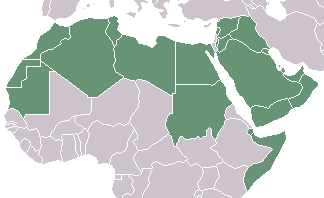
But many individuals of Arabic decent have succeeded in practically all fields and in all sorts of countries. Obviously this suggests that the fault is not that of the individual but it is of the oppressive, dictatorial backward exploitative political environment in each and every one of the 21 countries including the 22nd Occupied Palestinian Territory. A cursory look at the map of MENA from the Atlantic Ocean to the Persian Gulf reveals countries that are ruled by absolute monarchs, Emirs, Sultans and dictators. Muamar Kaddafi has been in power for 40 years and is preparing the ground for his son, Egypt is about to become Mubarak land, Syria was inherited by a young optometrist, Yemen has had the same president for 30 years , Tunisia just reelected its president for the sixth term with an 87% plurality and the beat goes on. Lebanon is the only country that has a claim to democratic institutions but in reality they are just as hollow and rotten as those of its neighbours. Political feudalism masquerading as democracy.

It is obvious that in a wired up world and one with more travel and interactions than ever before the role of the authoritarian regimes is becoming more difficult. But the size of the Mukhabarat keeps on growing, and indiscriminate fear continues to spread in an attempt to thwart the inevitable move to personal freedom and democracy. An Arab Wall shall fall and when it does it shall sweep all throughout MENA to topple these regimes. That we can count on, that is how history unfolds. I just hope and pray that when the time comes we are mature and smart enough to have a velvet revolution.

November 04, 2009

Education is not for the Intellectually Timid


It doesn't happen that often--maybe because students don't care to say anything about it--but occasionally someone in class would argue that some comments/discussions about certain belief systems are offensive and disrespectful. The other day, a student said, "I don't pay thousands of dollars to have my beliefs insulted." Presumably she meant that certain topics should be off limits because she's uncomfortable with anything that may undermine her sacred beliefs. She pays thousands of dollars to get an education--in my opinion, education means more than vocational skills--but is she interested in paying for an education that sharpens critical skills? How about, the value of arriving at a conclusion after examining the facts and weighing the validity of the arguments?

The piece of paper a university awards should mean that the title holder has critical skills, can analyze, can amend, construct reasonable arguments, connect the relevant dots, and, yes, maintain a curious mind. How about learning something that may be outside one's comfort zone? Is this valuable?

Now, on the question of respect. As a principle it's a good one: respect every individual's human dignity; respect their rights; respect their claims to own conscience and opinion. But, why should their beliefs be granted automatic respect? Yet, denying automatic respect to a point of view does not mean people don't have the right to have whatever opinion they deem appropriate or their right to express it. Simply put, I do not recognize any right of de facto respect. Opinions, theories, belief systems should be evaluated on their merits. How can anyone demand that such be afforded sacred status? What's sacred for me may be laughable to you, and I'm OK with that! So, should you!

To take it a step further, if you claim sanctity for your beliefs, it may be an indication of weakness. Instead of having the force of arguments to defend your views, you rely on censorship for protection. I realize that many people don't want to be challenged so they seek supporting views only. Of course, this is their right. Of course, it's their right to feel any way they want. They can create filters and avoid places that present challenges. However, they should be prepared to have their views tested when they enter an institution where intellectual pursuits involve critical examination of ideas and beliefs.

How do we know things? Seriously, how do we know if something is true & valid? Maybe I should ask instead, do we care to know?

If we do, then the scientific method is the best tool we have to understand and accumulate precious knowledge! This involves open discussion, challenges, reason, evidence, review, and a way to amend.

I'm naturally suspicious of claims of divine revelation. I don't think profound knowledge or truths should be revealed only in secret and to a very few people. Especially when such statements can't be put to a test or subject it to an intellectual challenge. As someone claims the right not to be offended, I claim the right to free speech and rational thought. Above all, I claim the right to be human!

And, that's my theory!


November 01, 2009

Can A Zionist Be Fair To Arabs?

Is the Concept of Fairness like the Blind Goddess of Justice?

There is no doubt that the Palestinian people have not been treated justly and fairly over the past sixty years or so. In a sense their problems became insurmountable with the Balfour declaration of Nov 2, 1917 (92 years ago this Monday), the development that started the saga of the establishment of Israel as a Jewish state on the land of the Palestinian Arabs of the time. Fast forward to the 1948 war and all what followed; one loss after another and then you might start to understand the rationale that the Palestinian mind set has had to adopt vis-a-vis all Jews and Zionists. That inability to differentiate between one Jew and another or even one Zionist and another has served to inflame the Palestinian Israeli problem when a more liberal and objective understanding could have helped ease the pain and maybe even hasten an end to the suffering.

To suggest that the Palestinian Israeli problem has become the opiate of the authoritarian Arab regimes is not an exaggeration. Each and every Arab ruler is constantly engaged in grandstanding and in advocating positions that would demonstrate the opposition of his regime to everything Jewish and his devotion to everything Arab and Palestinian. That is why Arab “sham democracies” are invariably opposed to anything Jewish and why they favour supporting resistance groups and even terrorist actions. Blowing up school children in Tel Aviv is to be commended while harming those in say Damascus is barbaric. Our love for the Palestinians is best demonstrated by the squalid living conditions that we have provided for them and the severe constraints that we have placed on their ability to integrate in our societies, own property and acquire citizenship. On the other hand we are constantly proud of our ability to blame the Jew for each of our problems be it social, economic,scientific or political. It has even been reported recently that a major Hollywood producer was denied the right to land at Beirut International because his private jet had some Israeli manufactured parts.

Tragic events that have befallen the Palestinian people should not be allowed to become blinders that deny us the possibility of making a case based on its merits even when we have to cast a favourable judgment on a Jew, an Israeli or even a Zionist. Two cases in point help illustrate the inadvisability of generalized condemnations. The latest events in Jerusalem subjected innocent Palestinian civilians to intolerable abuse at the hands of a few members of the Israeli police force in Jerusalem. The abuse was a reminder of the degrading incidents that took place at Abu Ghraib. In the Jerusalem case two Israeli border guards decided to pick on, torture and dehumanize Palestinians for no other reason than they were Arabs. The evidence of the abuse was incontrovertible; the Israeli guards had recorded their cruelty on their own video cameras and then proceeded to boast about it. When the Jerusalem Police force refused to prosecute the officers involved and to recommend that the matter be handled by internal investigation Shulamit Aloni was infuriated. Ms. Aloni, a former Education Minister went on the offensive berating the Israeli authorities and asking whether dignity is to be viewed as the preserve of the Jews only [article]. Her courageous stand is an example of what honest and decent people should do on both sides of the aisle.

Another example that deserves lots of attention in the Arab world is that of the Goldstone Report. Judge Goldstone, a South African Jew and a Zionist led the group that issued a scathing indictment of the Israeli war machine in its most recent Gaza adventure. Judge Goldstone was also critical of Hamas and its tactics. His judgment that both the IDF and Hamas have committed war crimes and violated the Geneva conventions in the last Gaza war might still prove to be one of the most damaging decisions against Israeli racism and brutality. Arabs will do well to listen to Judge Goldstone and follow his example of objectivity and justice.

It is very instructive to read the text of an interview with Judge Richard Goldstone conducted by the liberal American Rabbi Michael Lerner that is posted at:

Goldstone Interview

A Podcast of the above can be heard at: Ramblings

Copenhagen, One More Time

Who Cares?

The peace Nobel laureate Desmond Tutu sent a letter to the EU parliament in which he berated them for not acting to slow down climate change. Mr. Tutu said in his letter " The rich world is historically responsible for the emissions causing climate change and they have a moral obligation to provide the means for the countries on the front line to survive and prosper."

Mr. Tutu was in effect urging the countries of the North to overcome their differences and to live up to their moral responsibility by agreeing; during the Barcelona negotiations; to find a way out of the current impasse before Copenhagen . The developing countries have made it clear that they expect financial transfers from the developed countries of around $148 billion a year by 2020 if they are to do their part of reducing their expected carbon footprint.

But since climate change is a global issue then it does require a global solution. Again it seems obvious that we cannot have a global solution if the largest, well second largest , emitter is not ready to participate in the game. Copenhagen is exactly one month away and the US climate change bill is still languishing in the Senate sub-committee. Senator Boxer , the chair of the Environmental Committee, remains hopeful that a bill will leave her committee before Copenhagen. That is not assured because a number of the Republican senators promise not to attend the committee mark up sessions. If they do not attend then no bill can be presented to the senate at large. Even if a bill is to emerge some very powerful Democratic senators such as Max Baucus promise to hold up the measure in his powerful Finance Committee by delaying funding for the measure.

What is even worse are the proposed targets. Kyoto which was initially agreed to by the US was to cut carbon emissions by 5 % from the 1990 level by 2012. The US is estimated to have released around 5 Billion tons of carbon in 1990 and thus the implicit target by 2012 would have been 4.75 billion tons.The new bill is aiming for a 20% reduction from the 2005 levels by 2020. Since the 2005 emissions are estimated to be 6 billion tons then the 20% reduction will take the US back to 4.8 billion tons by 2020. That is irresponsible behviour besides being a cruel joke on the aspirations of those that take these existential matters seriously. The US is targeting to potentially reach by 2020 a level of carbon emissions that it was supposed to have hit by 2012 and yet they want the world to call such measures responsible action. Go figure.

Mr. Yao de Bar, the UN Climate Change Secretariat said it best when he stated the need to "Step back from self interest and let common interest prevail" Nothing else will work.

Fallujah Horror


We have often been told that war is hell. The residents of Fallujah, Iraq, are finding out that war for them is worst kind of hell imaginable. Worse than Dante’s seventh circle if that is possible because the after results of war in Fallujah will be felt for at least for a decade or two. We are not talking about physical destruction of homes and factories or the total annihilation of infrastructure such as water utilities, electricity generating plants, sewage plants, bridges and highways. All of these can be rebuilt and life will go on. In this case we are concerned with much more sinister effects of war, effects that linger on and destroy life. What the people of Fallujah, more than any other people in the world, are facing everyday and every second of every day is hell on earth; they have to witness the death of more than a quarter of the new born within a week of their birth and to make the deeply painful decision of what is to be done about the huge proportion of grotesquely deformed babies that are born with two heads, three eyes, no limbs, one eye.

The world owes the people of Fallujah an explanation of what has triggered this avalanche of deformity and horror. The usual celebratory experience of giving birth has been transformed to a time of anxiety and horror. Women dread becoming pregnant and above all carrying the fetus for nine months only to find out that what they are carrying has been condemned to death the moment that life was to begin. Such rapid and unique developments do not occur without a cause. The only logical proximate cause for this human tragedy was the 2003 war and in particular the 2004 assault on Fallujah. It was estimated that during that assault over 10,000 tons of depleted uranium, DU, was used in the bombardment of the city of 300,000 people.

Both the Pentagon and the British governments insist that the use of DU is not illegal and that the studies that they have undertaken do not reveal DU to be a carcinogen. That might be true but many an international body including the EU and the UN have been trying, unsuccessfully, to prevent the use of DU munitions because there are many physicians, engineers and studies that suspect that the DU produced vapour in battles is capable of contaminating humans, soil and water. It is this radioactive contamination that causes the severe deformities in the newly born “things” since many of them do not look like humans.

A group of doctors at the hospitals of Fallujah have documented the severity of the problems encountered by the newly born and has approached the UN and other world institutions asking for an investigation to determine the root cause of this tragedy. Tragic results from technological developments in war are nothing new. Agent Orange was used extensively to defoliate forests in Vietnam but wound up in causing the death and even childbirth deformities of thousands of people that it was deployed to protect. McNamara, who approved the use of Agent Orange never, forgave himself for all the damage and suffering that his decision has caused to millions of people but especially for loosing his son to an Agent Orange induced illness.

The prospective new parents of Fallujah and the next generation are being asked to bear the unbearable burden of seeing their children die within days of being born or of giving birth to grotesquely deformed beings. This is the result of a war of choice during which one side made the deliberate decision to subdue a city by pulverizing it and by subjecting its innocent civilians to the most incredible of human sufferings. DU is an instrument of death and horror that must be banned from use in war until serious and exhaustive studies can be made to show the opposite. Meanwhile the heart of all decent and honorable citizens in the world goes out to the suffering parents of Fallujah and to the horror that they have been forced to live with. We must make sure that such acts are never repeated again. DU; if found to be the culprit; must be prohibited and declared in violation of the laws of war besides the Declaration of Human rights.

October 19, 2009

TANSTAAFL

Who Pays For Lunch?

“There ain’t no such thing as a free lunch” has been traced to the late nineteenth century when saloons in the US offered free lunch for their paying customers. Obviously the idea has since become a corner stone of economics by emphasizing that whenever we make a choice then we have to sacrifice something else in exchange. The same principle governs all activities in the scientific world that is governed by the entropic nature of the universe. We can never produce something out of nothing.

It is unfortunate, in light of the above, that so many thinkers, institutions and organizations have chosen to remedy what is arguably the greatest challenge to civilization; environmental degradation; by advocating policies that are not guided by that most basic of ideas.

Sustainability, an inevitable phenomenon of an increasingly complex systems, is being promoted by each and every government in the world, by the United Nations and all its agencies and many think tanks and educational institutions of higher learning through arguments and models that seek more economic growth when it is very clear that sustainability came to the forefront; as an existential issue; as a result of the destructive activities of economic growth. Major concerns about sustainability, the ability to continue the current scale of operations into the future demands that we adopt a radically different methodology rather than the current paradigm that glorifies economic growth and unfettered markets. As the proverb says "If you always do what you've always done, then you'll always get what you always got." Business as usual will only result in severe shortages and unthinkable environmental degradation.

Kenneth Boulding, the preeminent economist is reputed to have said: “Only mad men and economists believe that infinite growth is possible in a finite world”. He actually went further as to characterize that kind of irresponsible behavior as a “cowboy economy” when he suggested that we need to think of the delicate balance of a “spaceship” earth. A society without limits is a fiction.

This idea of the absolute need for limits to growth has been adopted by many thinkers in all sorts of fields, physics, anthropology, biology, ecology, philosophy and economics just to name a few. But the most effective proposition has been the one made by Herman Daly who revived the old idea of the classical economists in general and that of J. S. Mill in particular, namely steady state economics. This notion has become the foundation for all environmental visions that seek to steer human activity in such a way as to avoid the imminent collapse that we are heading towards. How far are we from the abyss is debatable but many of the models such as the Club of Rome, global ecological footprint, Pimentel estimates of the limits to the size of global population or the Energy Return on Investment (EROI) speak in terms of decades and not centuries.

Add to the above the bleak Environmental assessment of the group of 1300 scientists assembled by the UN, the dreadful outlook of James Hansen of NASA about the severity of the upcoming climate change in addition to the dire predictions of James Lovelock who has been described as “one of the environmental movement’s most influential figures” and one cannot help but be bewildered when we hear the politicians suggest more growth when it was growth that created the problem in the first place. When would we understand that more of the same is a recipe for disaster and that sustainability is not compatible with economic growth. It is simply one or the other.

Under the best of circumstances growth can be justified as a means to an end but it is pure madness when growth becomes an end in itself as it has become in the developed world. Why is it so difficult to connect the dots and conclude that since pollution is a by product of economic activity and since economic growth demands a greater scale of human activity then economic growth is the cause of environmental degradation. Maybe when all is said and done Homo sapiens (wise humans) we are not.

The world is at a critical proverbial fork in the road. We can either change direction and hope that we can avoid the abyss or we can pretend that there is a free lunch and we can have it all, economic growth and sustainability in a finite world. The choice is very clear, either follow the principles and the models that show unmistakably he absolute need for a radical change in the whole architecture or continue the pretense that we can have our cake and eat it too. Lipstick on a pig just won’t cut it.

October 04, 2009

Copenhagen, Again.


"Progress toward high industrialized world emissions cuts remains disappointing during these talks. We're not seeing real advances there," Yvo de Boer, the head of the U.N. Climate Change Secretariat, told reporters.

That just about sums up all the progress or disappointment at the on going pre Copenhagen discussions taking place at Bangkok, Thailand. The discussions are scheduled to end on October 9, 2009 and are being attended by delegates from 180 different countries who are attempting to nail down a global agreement to cut carbon emissions that will be finalized at Copenhagen. Unfortunately , the differences between the developed world and the developing world are just as wide as they have ever been. Even the targets for the developed world seem to be way out of reach.

Such an outcome should not be surprising to all of those who are familiar with the logic behind the “Tragedy of the Commons”. Each country wants to decrease the cost of its own targets hoping that somebody else will pick up the slack. When each country attempts to lower its own cost by shifting it to another country then the earth suffers because the global targets will be missed and only ruin will result.

The US position has posed the greatest challenge to the participants so far. "Not knowing what the United States is going to be able to bring to Copenhagen really makes it very difficult for other countries in that Kyoto discussion to increase the level of ambition of their numbers," said John Ashe, a senior diplomat who chairs a key U.N. group negotiating expanded Kyoto commitments. So far it does not look very promising for the developed world to agree on the up to 40% carbon emissions cut by 2020 from the 1990 levels that scientists deem to be essential.

To make things even more complicated the developing nations refuse to accept anything less than a 40% cut by the developed world in addition to financial transfers that do not appear to be forthcoming. As you can see both sides are playing a game of chicken when the health of the entire planet is at stake.

September 27, 2009

Is COP15 at Copenhagen Flawed?

Will the World End in Fire?
We are already witnessing the beginnings of a barrage of saturated media coverage about climate change and the upcoming Copenhagen conference. By the time the COP15 Conference at Copenhagen arrives, it might be the only item in the news all over the world and that is good. We need to take some meaningful measures that could get us to move in the right direction. Who knows, we might even avoid the apocalypse.

The failure to reach an agreement to adopt an effective and clear plan of action to reduce greenhouse gas emissions would be a major setback to the environmental efforts to avert a catastrophic climate change, an increase in temperature greater than 2 degrees Celsius. Sea level will rise, major ocean currents would be disrupted, monsoons and hurricanes will increase both in their frequency and intensity, crop failures will become more common, desertification will increase; life as we know it will become disrupted. What is at stake is surely the greatest challenge that civilization has ever faced and a successful Copenhagen meeting is a must.

Yet if we are to act as dispassionate observers of this process we will have no choice but to note the major logical fallacy upon which Copenhagen is built. The issue is not whether the world can afford not to decrease its GHG emissions; it can not. The real issue though is whether Copenhagen can deliver us out of this self inflicted quagmire? How can it possibly do that when we even refuse to look into the root cause of this problem?

Anthropogenic emissions are simply the product of human economic activity and no one is proposing that we limit economic growth. The position at Copenhagen is nothing else but an exercise in a combination of major logical fallacies such as “argumentum ad populum” combined with “argumentum ad baculum”; a false argument based on the appeal to the majority and to fear.

Let me explain. One of the major efforts that the nations, represented at Copenhagen, will confront is that of reducing car emissions. It is widely believed that the move to hybrid engines and electric plug-in vehicles, in addition to more efficient engines, will turn out to be a major contribution in achieving the sought reduction in carbon emissions. But would it? The world produced over 70 million new vehicles during 2007 but under the best estimates all the hybrids and electric plug-in will not amount to more than 2 million units a year by 2015. If these numbers hold then that is a miserly 2% of the new cars, not to mention that China and India alone are slated to replace the United States as the number one producers of vehicles in the world. Emissions from China and India, both of whom are neighbours of Bangladesh, will not be regulated. Climate change is the largest infringement on the sovereignty of Bangladesh and yet it goes on each day of the year without firing a bullet or creating a political standoff. Even if we are to assume, as unlikely as it might be, that by 2020 one fifth of the newly manufactured in the world each year would be powered by either a hybrid or an electric engine, what about all the raw materials that has to be mined and processed in order to build all of these cars not to mention all the tires, spare parts, accidents and highways that they will generate and require? Would supplying all of these resources by “developing” countries be without a carbon footprint?

A more efficient car is a welcome development but a more efficient car will be useless in reducing the human impact on the ecosystem unless we are to simultaneously build fewer cars and consequently fewer garages, less highways, less spare parts use less resources and conserve our natural capital.

It is not sufficient to set up a goal. We must set up a goal accompanied by a workable plan otherwise the goal would best be classified as a wish. Imagine ,if you will, that all the water bottling facilities in Fiji ; whose products are shipped to North America and the rest of the world; are to become totally powered by energy acquired through either thermal solar , photovoltaic or wind turbines, would that then make the consumption of such water environmentally friendly? You decide.

As you can see from the above the need to cut down on GHG’s and carbon emissions is not questioned. What is at stake is our ability, or rather inability, to accept that climate change is nothing more than a manifestation of a systemic failure and such failures demand a total redesign of the system. If we cannot understand this most basic of all facts then all our efforts, as well intentioned as they might be will be for naught.


A Podcast of the above text can be found at: www.ramblings11.mypodcast.com

September 02, 2009

No Real Global Commitment to Solve Climate Change

There is unanimity that climate change poses an enormous challenge to our specie. That is no longer debatable. But assessing the enormity of the problem is one thing and doing something meaningful about it is another. History is replete with examples of catastrophes that were hastened because of our inability or unwillingness to act.

Every aspect of environmental degradation from climate change to desertification, from overfishing to deforestation, from population growth rates to malnutrition , from overproduction to overconsumption, from diminishing biodiversity to the unabiding trust in economic growth, from unjust distribution of income to neo imperialism, from unsustainable practices to the rejection of intrinsic value and from the conviction that the whole of creation was meant for our own whimsical use to the strong belief that humans are hard wired to be selfish is a vivid demonstration that “Homo Sapiens” ( wise humans) we are not. Yet we pretend that we are and furthermore we make believe that we are earnestly looking for a solution.

The upcoming COP 15 at Copenhagen scheduled for December 2009 was supposed to demonstrate our earnest desire in finally seeking a solution that is commensurate to the existential challenge of keeping climate change within an increase of 2 degrees centigrade. Well don’t hold your breath. The UN Development Chief Helen Clark has just issued a statement preparing us for the upcoming disappointment. She declares: “"If there's no deal as such, it won't be a failure. I think the conference will be positive but it won't dot every 'i' and cross every 't'." That does not make you very confident in the quality and commitment of international governance does it?

Kyoto and Copenhagen are about one issue only. If we believe, truly believe that climate change must be stopped and that it is essentially the result of human activity then we need to act and act promptly. Global calamity is about to strike and we have no one to blame but us. The Pogo Cartoon said it best over forty years ago” We have met the enemy and he is us”.

So what is the US, the world's largest economy, doing about this problem? The US seems to have finally accepted the idea that it is its duty, nay its obligation, to reduce its carbon footprint since it is the greatest contributor to the anthropogenically produced carbon since the onset of the industrial revolution. Give the Obama administration its due credit. It plans to submit a plan to reduce the US contribution to the worldwide carbon emission through a cap and trade program.

The proposed reductions are no where close to what they should be but they are greater reductions than what the previous administration has been willing to commit to. Under the proposed system of Cap and Trade the government will set a total level of emissions and issue against that standard permits. The emitters cannot collectively exceed the level mandated by the government but they are free to trade these permits among each other as they see fit. That does not sound so bad except the reduction in overall emissions is no where as major as the challenge dictates that it should be.

The other problem, and may I suggest that this is just as major if not even more so, the government plans to give away gratis, for free, these permits to the corporations that pollute instead of auctioning these permits and raising the 100s of billions of dollars that they are worth. Think about it, instead of asking the polluter to pay we are asking the already burdened tax payer to subsidize pollution. That is madness. But why would anyone give away for free that which is worth billions? Well we have already answered that question. Homo Sapiens we ain’t neither are we rational or even committed to the idea of biodiversity and sustainability.

And finally, let me say that the US is not the only obstacle to finding a solution to climate change. China, India, Brazil and Saudi Arabia are even more adamant that they do not have to apply any restraint to their level of economic activity--let the health of the global ecosystem be damned. One can easily add Russia and Indonesia to the group of countries that have to be dragged to adopt proforma carbon emission reduction targets. (The combined emissions of the above seven countries is over 56% of global carbon emissions). Enough said about our real concern for sustainability and biodiversity.

A podcast of the above can be heard at: ramblings11